


 English
 русский
 Español
 Português
 italiano

Home / News / Industry News / How Does a Parallel Shaft Gearbox Work: Gears, Shafts and Mounting in Farm Machines


Industry News
Oct 23,2026
How Does a Parallel Shaft Gearbox Work: Gears, Shafts and Mounting in Farm Machines
How it works
A parallel shaft gearbox works by passing power from an input shaft to an output shaft that runs alongside it, through gears mounted on each shaft. The size difference between the two meshing gears sets the speed and torque change: a small gear driving a large one slows the output and raises torque, and the reverse speeds it up. In farm machines this simple, straight power path is used to drive PTO generators, feed mixers, wood crushers and orchard shakers, with the gears, shafts and housing sealed in an oil bath to cope with dust and vibration.
2shafts side by side
2housing options
1straight power path
What Is Inside a Parallel Shaft Gearbox
Open one up and the layout is easy to follow. Two shafts sit parallel in a rigid case. A small gear, the pinion, is fixed to the input shaft. A larger gear is fixed to the output shaft and meshes with it. Bearings hold each shaft in position, seals keep oil in and dust out, and a breather lets the case relieve pressure as it warms.
Input shaft and pinion
Receives power from the PTO line or engine and turns the small driving gear.
Output gear and shaft
The larger driven gear sits on the output shaft, which connects to the machine.
Bearings
Hold both shafts in line and carry the gear loads, including the side thrust of helical teeth.
Seals and breather
Keep lubricant in, keep dust, mud and water out, and let the case breathe as it heats.
Housing
Holds everything in alignment, carries the mounting points and takes impact from the machine.
Oil
Lubricates the gear mesh and bearings and carries heat away from the working surfaces.
The Power Path in Four Steps
1
Power arrives
The tractor PTO shaft turns the input shaft, usually through a PTO driveline.
>
2
Pinion drives the gear
The pinion meshes with the larger gear and pushes it around.
>
3
Speed and torque change
The tooth count ratio sets how much slower or faster the output turns.
>
4
Machine is driven
The output shaft, parallel to the input, carries the changed speed and torque to the implement.
Gears: How Speed and Torque Change
The ratio comes from the number of teeth on the two gears. Divide the teeth on the driven gear by the teeth on the driving pinion and you have the ratio. Speed and torque trade against each other, so what the output gains in one, it gives up in the other.
Ratio = teeth on driven gear / teeth on pinion
Example: a 20 tooth pinion driving a 60 tooth gear gives a 3:1 reduction. The output turns three times slower and delivers roughly three times the torque, before losses.
Reducer
Small pinion drives a large gear. Slower output, higher torque. Used where the machine needs force, such as crushers and spreaders.
Speed increaser
Large gear drives a small one. Faster output, lower torque. Used where the machine needs more speed than the PTO supplies, such as feed mixers and some generators.
Most farm parallel shaft gearboxes use helical gears, whose angled teeth mesh gradually for smoother, quieter running than straight-cut teeth. The trade-off is axial thrust, which the bearings are designed to carry.
Shafts and Bearings in Farm Conditions
The shafts connect the gearbox to the rest of the machine, so their end style matters. Input shafts commonly match a PTO driveline, while output shafts match the implement. Keyed, splined or flanged ends all appear in farm drivelines, and the right one depends on the machine, so confirm it before ordering.
- Keep shafts aligned. A shaft that is out of line puts side load on the bearings and seals and shortens their life.
- Protect the seals. Wrapped crop, twine and wire cut shaft seals quickly, so clear them regularly.
- Use the right driveline. A matching PTO shaft and correct power transmission shafts keep loads where the gearbox was designed to take them.
Housing: Aluminum or Cast Iron
The parallel shaft gearboxes range comes with two housing options, and the choice depends on the load.
Aluminum alloy housing
Light overall, with a shell cooling air duct layout that helps control temperature rise during long continuous running. Suited to low and medium load equipment where total machine weight is limited.
Cast iron housing
Thicker walls and stronger structural rigidity, with good resistance to sudden impact and a larger tooth bearing margin. Suited to fluctuating loads from crushing and rolling equipment.
Mounting Options and Alignment
Parallel shaft housings have a regular installation base, which makes the unit easier to fit and align on the machine frame. How the gearbox is held depends on the machine, and the mounting style should be agreed with the supplier before production.
| Style | How It Is Held | Where It Is Used |
| Base or foot mount | Bolted through the housing base to the frame | Generators, mixers, crushers on a rigid frame |
| Flange mount | Integral flange bolted to a mating face | Orchard shakers and vibration-heavy machines |
| Custom bracket | Special housing or bracket to fit the machine | Non-standard equipment |
Alignment check: tighten the mounting bolts evenly, turn the shafts by hand where possible, and confirm there is no binding or side load before the first run.
Where Parallel Shaft Gearboxes Are Used
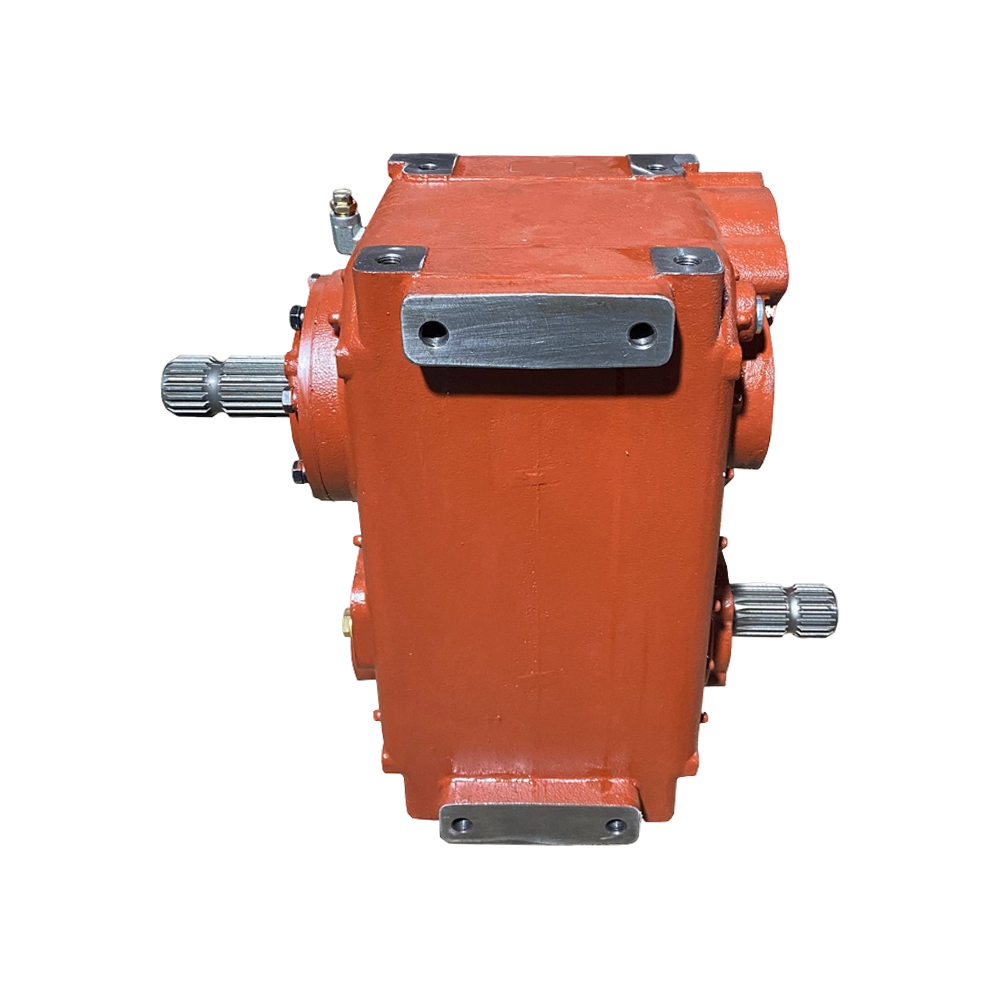 ND P153 for feed mixers A speed-increasing gearbox with an integrated variable-speed clutch, made for farm feed mixer equipment and steady power during continuous mixing.
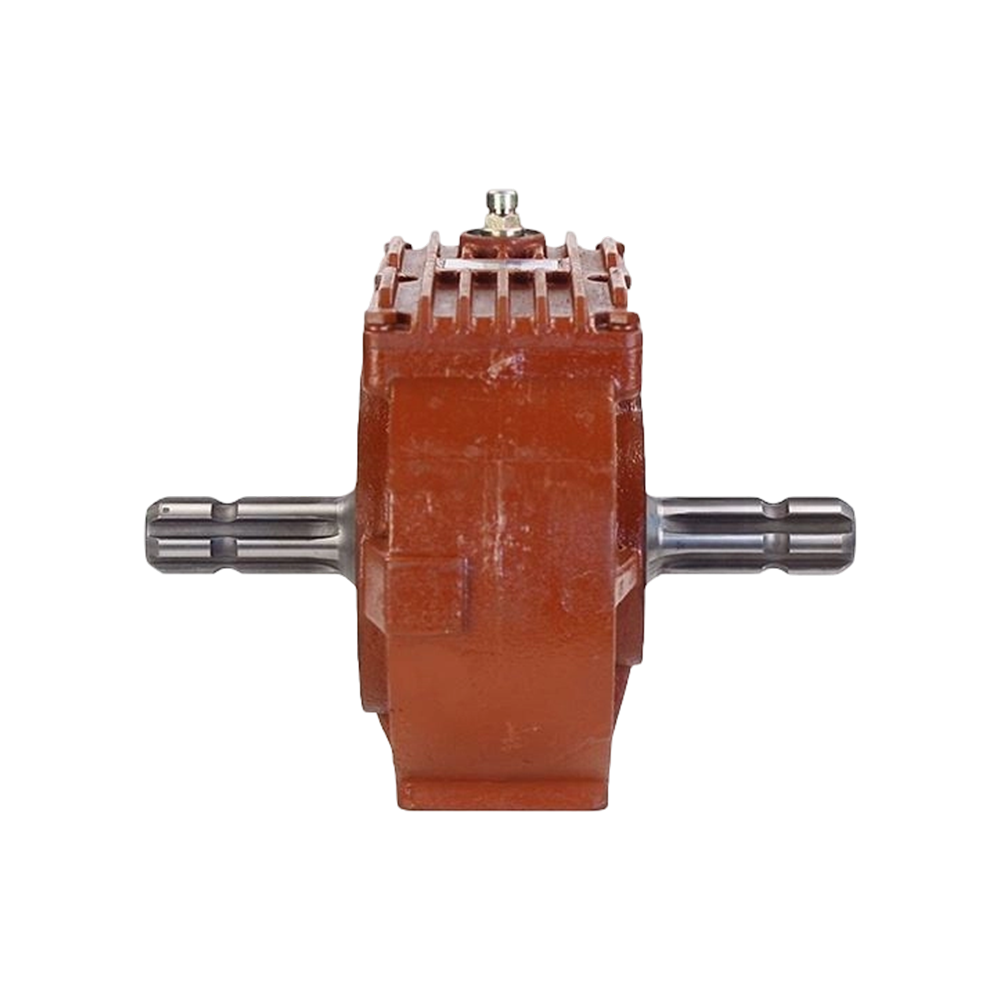 ND P105 for olive beaters A cast iron, flange-mounted gearbox for olive beaters and orchard fruit shaking machines, built for continuous vibration and frequent start-stop loads.
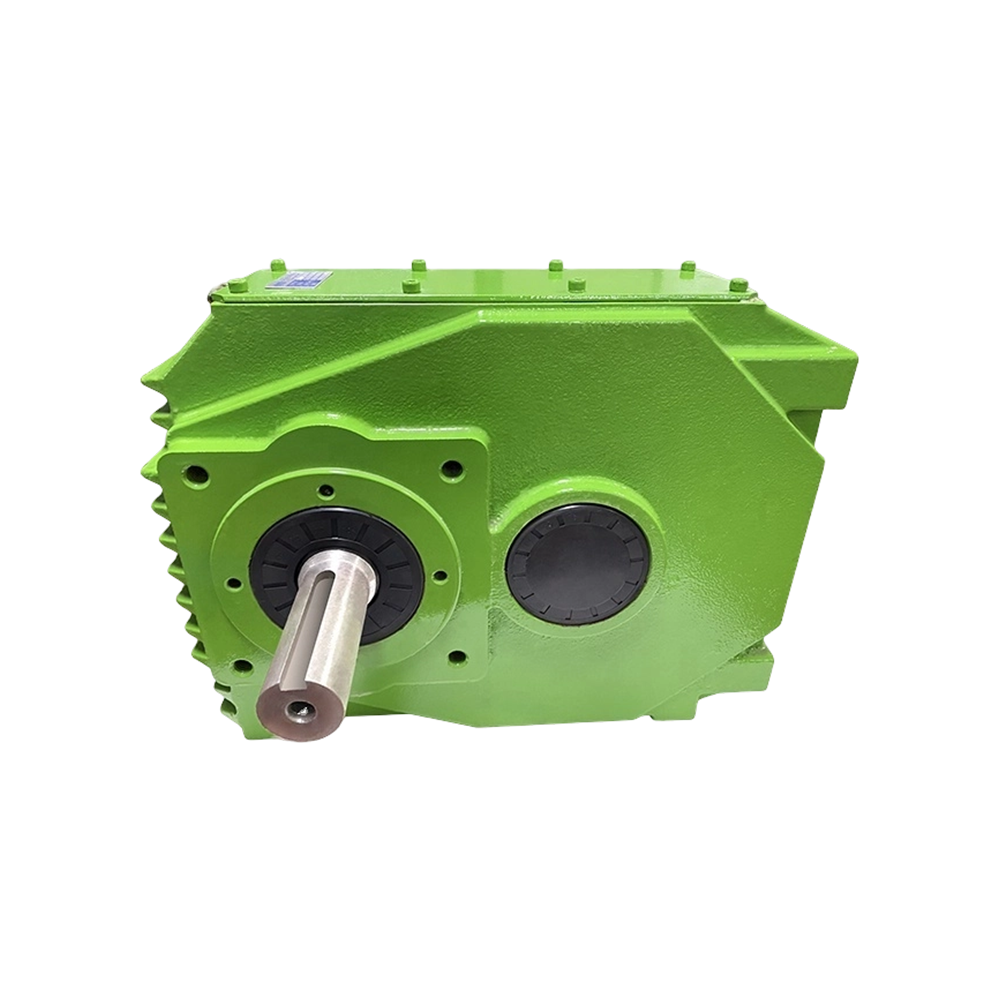 ND P130 for PTO generators A one-piece cast iron helical gearbox that converts tractor PTO power into stable output for generators running for long hours.
Other typical uses listed for the range include wood crushers and fertilizer spreaders. For high-torque feed mixer drives with planetary stages, see the PL series mixer gearboxes.
Parallel Shaft or Right Angle
The choice depends on where the implement shaft sits compared with the PTO. A parallel shaft gearbox keeps the power on the same plane. If the implement shaft must run across the machine, a right angle unit from the B series cast iron gearboxes or the A series right gearboxes is the better fit.
Why Farm Machines Use This Layout
Farm drivelines are rarely gentle. Power comes from a tractor PTO or engine, passes through a shaft that flexes with the ground, and ends at an implement that loads up unevenly. A parallel shaft gearbox suits this job for a few practical reasons.
- Straight power path. With the shafts side by side, the power takes a direct route through the gears, which keeps power loss low.
- Simple to mount. The regular installation base makes the unit easy to place and align on a frame.
- Reducer or speed increaser. The same layout can slow a drive for torque or speed it up, so one family covers many machines.
- Choice of housing. Aluminum or cast iron lets the buyer match the case to the load and the weight limit.
Checklist Before You Specify One
A parallel shaft gearbox is matched to a machine, not picked from a catalog number alone. Gather these details first so the supplier can confirm the right model or a custom build.
Machine and duty
What it drives, how many hours a day it runs, and whether the load is steady or shocky.
Input details
The PTO or engine speed and the input shaft end that matches your driveline.
Output needs
The speed the implement needs, plus the output shaft end and its direction of rotation.
Ratio
Reduction or speed increase, confirmed with the supplier for your machine.
Mounting
Base or flange mount, bolt pattern and the space available on the frame.
Housing
Aluminum for lighter loads and weight limits, cast iron for impact and heavy duty.
Problems and What to Check
| Symptom | Likely Cause | What to Check |
| Rising whine or grinding | Low oil, worn gears or bearings | Oil level and condition, shaft play |
| Case runs very hot | Wrong oil, overload, blocked breather | Oil grade, machine load, breather |
| Oil weeping at a shaft | Worn or cut seal, wrapped crop | Seal lip, shaft surface, debris |
| Vibration through the frame | Misalignment or loose mounting | Bolts, mounting face, driveline angle |
Worn gears can be replaced without changing the housing. See cylindrical gears and the wider range of gearbox spare parts and components. If a standard model does not match your machine, a custom gearbox can be developed from your drawing.
Frequently Asked Questions
What is a parallel shaft gearbox
It is a gearbox whose input and output shafts sit side by side, linked by meshing gears. It changes speed and torque without changing the direction of the shaft axes, and farm machines use it for generators, mixers and crushers.
How does a parallel shaft gearbox change speed
The ratio of teeth between the two gears sets the change. A small gear driving a large one slows the output and raises torque, and a large gear driving a small one speeds the output up.
Does a parallel shaft gearbox change the direction of rotation
The shaft axes stay parallel, so the power path does not turn through an angle. When two external gears mesh, the output shaft turns the opposite way to the input, and the machine layout should account for that.
Should I choose an aluminum or cast iron housing
Aluminum suits low and medium loads where weight and heat matter. Cast iron suits crushing, rolling and any work with heavy shock, because of its thicker walls and rigidity.
What should I send to get the right gearbox for my machine
Send the machine type, PTO speed, the speed you need at the output, the shaft ends, the mounting style and a drawing or photo of the existing unit. That is usually enough to match a model or define a custom design.
Related Products

-
 +86 18058161630
-
 +86 571 81607235
-
 sales@ag-mech.cominfo@ag-mech.comiris@ag-mech.com
-
 No.21 Feixiang Rd, Suoqian Town,Xiaoshan Dist. Hangzhou, Zhejiang Province, China

Products

Contact Us
Copyright ©
Hangzhou Hengnie Machinery Co., Ltd.
All Rights Reserved. Wholesale Agriculture Speed Reducers Supplier Custom Agricultural Gearboxes Manufacturer

