


 English
 русский
 Español
 Português
 italiano



ABOUT US
Your Trusted Partner in Agricultural
Transmission Solutions
Hangzhou Hengnie Machinery Co., Ltd.
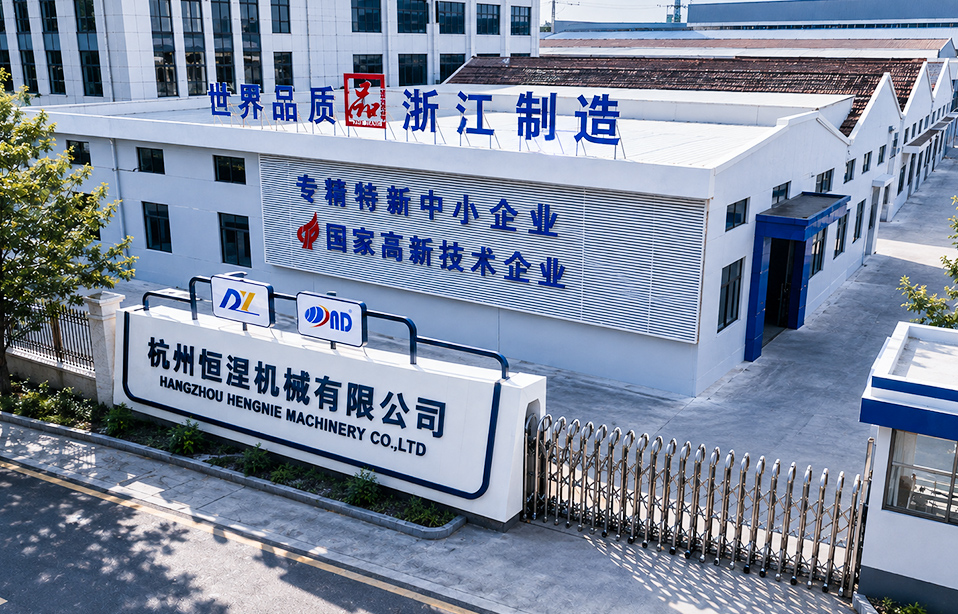
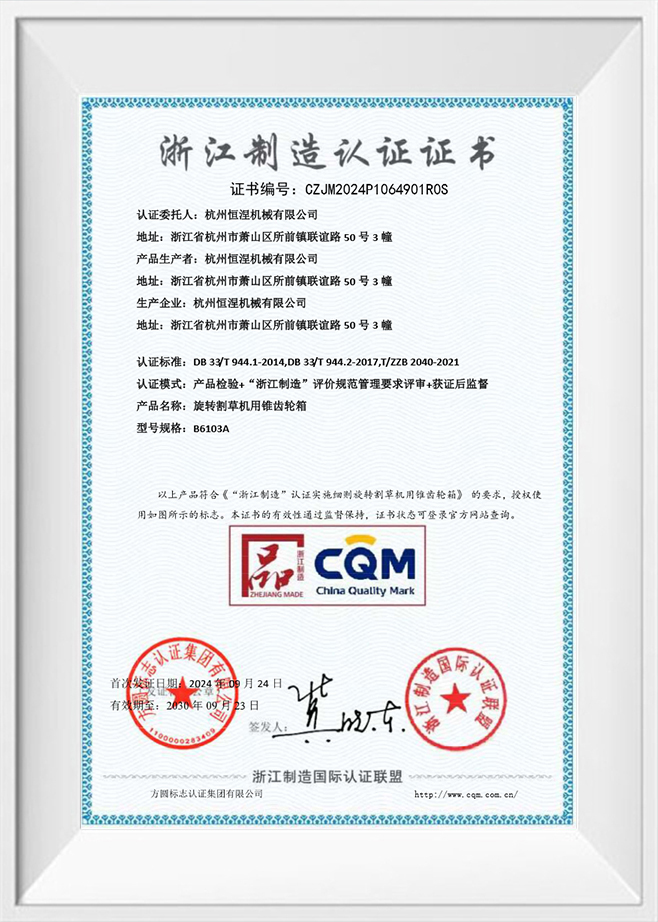
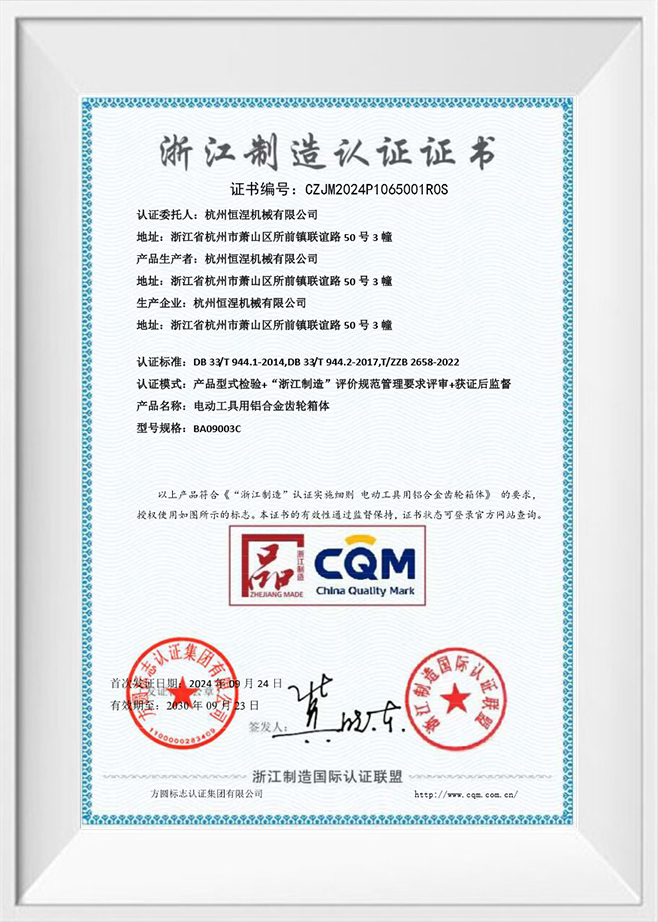
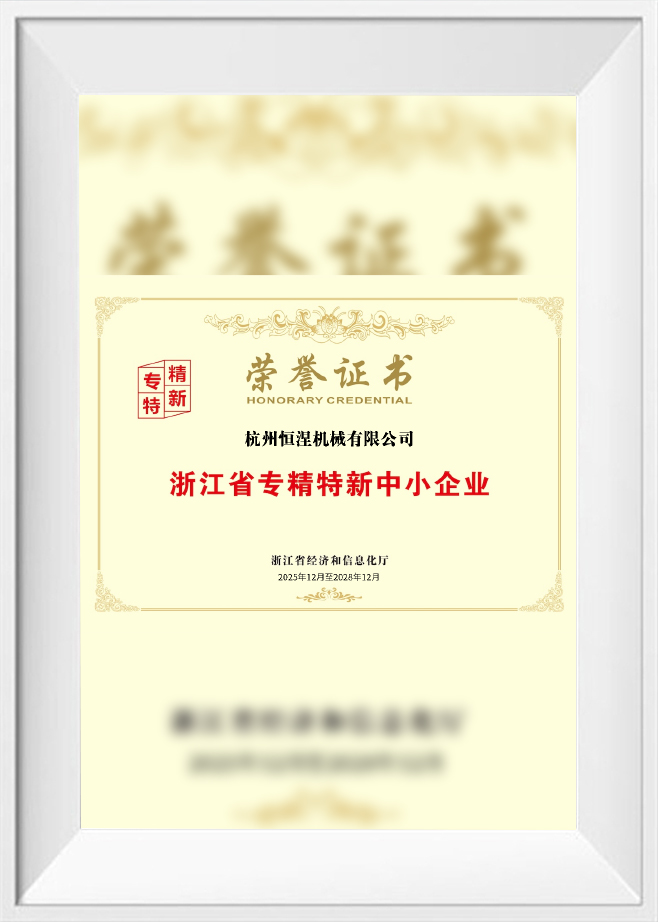
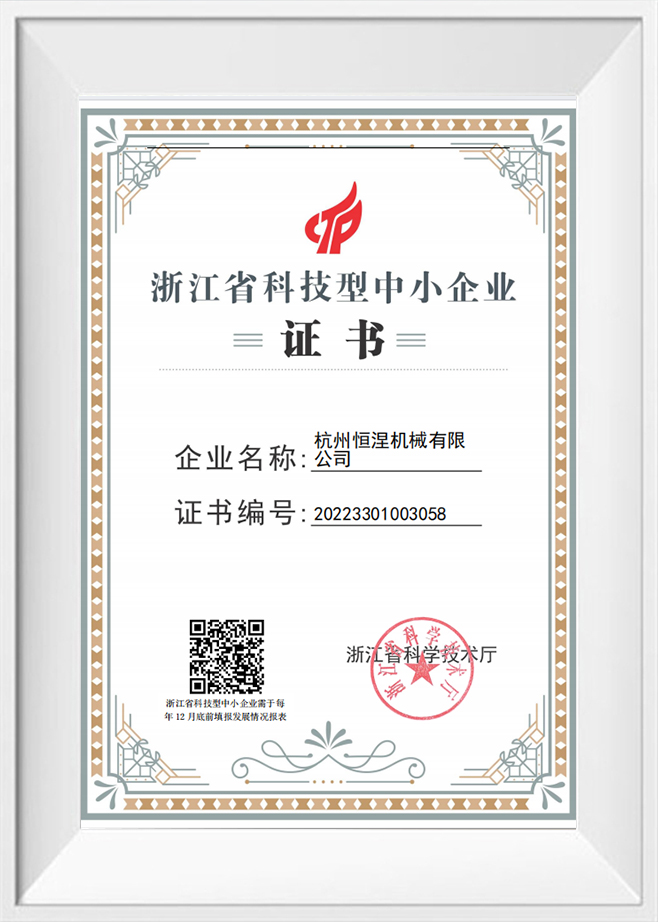
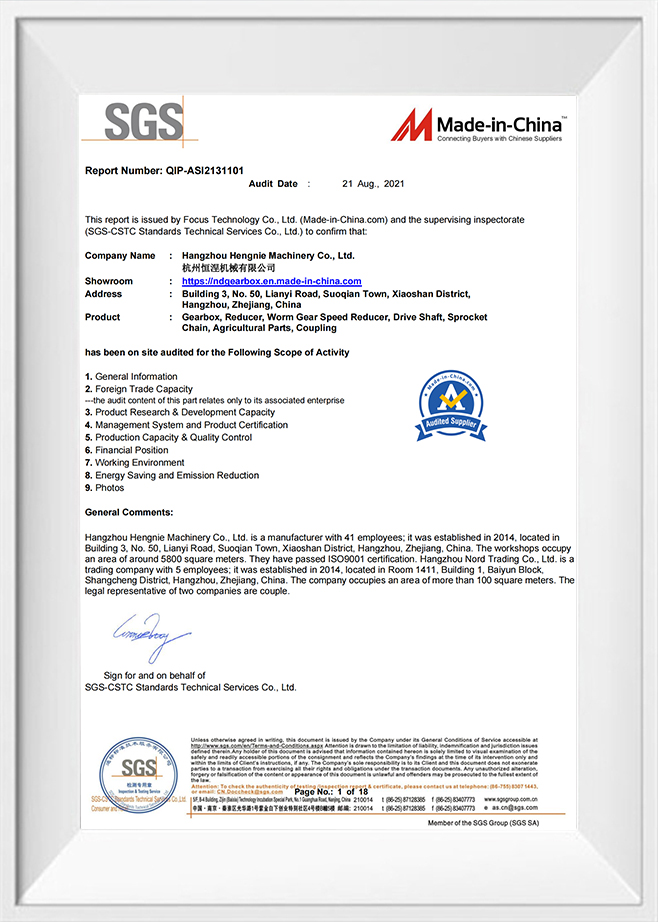
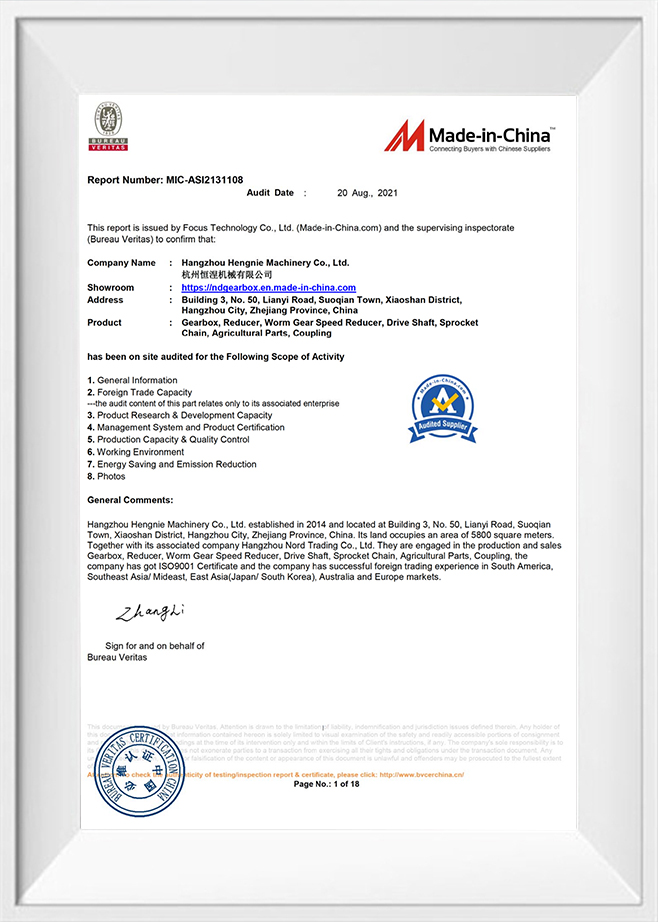
Founded in 2010, Hangzhou Hengnie Machinery Co., Ltd., located in Xiaoshan Industrial Park, Hangzhou, is a high-tech enterprise integrating R&D, production, sales, and technical services. It has been designated a National Specialized, Refined, and Innovative Enterprise. The company boasts a professional R&D team and numerous independent patents, focusing on the R&D and production of various agricultural machinery gearboxes and transmission components.
As a professional China Power Transmission Shafts Manufacturer and custom Power Transmission Shafts factory, Offering a complete range of products, it can customize to order and provides intelligent product customization services. The company owns the brands "ND," "AG," and "DY," and its products are compatible with various agricultural machinery and intelligent products. Over 85% of its products are exported to Europe, America, and Australia. With superior quality, technical strength, and excellent service, it has won global customer recognition. We sincerely welcome customers from all walks of life to cooperate for mutual benefit!
As a professional China Power Transmission Shafts Manufacturer and custom Power Transmission Shafts factory, Offering a complete range of products, it can customize to order and provides intelligent product customization services. The company owns the brands "ND," "AG," and "DY," and its products are compatible with various agricultural machinery and intelligent products. Over 85% of its products are exported to Europe, America, and Australia. With superior quality, technical strength, and excellent service, it has won global customer recognition. We sincerely welcome customers from all walks of life to cooperate for mutual benefit!
Honor
News
-
Industry News 2026-11-16
A rotary rake is built around one simple demand: a single tractor PTO shaft has to spin a whole row of tine rotors at matched speed and matched phase. The part that makes this possible is the rake gearbox, and in the HR series it is built as a one-input, mult...
View More -
Industry News 2026-11-09
A power harrow earns its reputation in the field, but the part that decides whether it survives a full season is usually hidden under a cover. The gearbox takes the PTO input from the tractor, redirects or steps it down, and delivers controlled torque to the ...
View More -
Industry News 2026-11-02
Corn headers are unforgiving drivetrains. Snapping rolls must turn slowly while carrying high torque, gathering chains must stay synchronized on both sides, the cross auger has to move a heavy mat of stalks, and any of these functions can seize within a secon...
View More
Contact us now
Industry Knowledge Expansion
Power Transmission Shafts Manufacturer for Agricultural Drive Systems
At Hangzhou Hengnie Machinery, the shafts inside an agricultural gearbox carry the torque that keeps an implement working. We are a Power Transmission Shafts Manufacturer based in Hangzhou, China, supplying gearbox shafts for tillage, seeding, spreading, baling and harvesting equipment. Our range covers input, output and intermediate shafts for spiral bevel gearboxes, parallel shaft reducers, hydraulic drive units and application-specific gearboxes.
The shafts are produced from alloy steel selected for integral forging. Coaxiality is controlled so the rotating assembly does not develop eccentric vibration at higher speeds, and the finished shaft is able to carry gear meshing forces, transmit torque and withstand long-term alternating torsion and radial pressure. That makes the shaft a reliability-critical spare part as well as a core component in new gearbox production.
Position Within the Gearbox Spare Parts & Components Range
Power transmission shafts are part of our Gearbox Spare Parts & Components family, together with cylindrical gears, bevel gears and PTO Shafts. We supply them in three main roles:
- Input shafts that accept tractor PTO drive, electric motor input or hydraulic motor input.
- Output shafts that deliver torque to working sections through splines, keyways or flanges.
- Intermediate shafts that link multiple gear stages, including conjoined gearbox sections.
For replacement and maintenance work, the shaft is usually ordered with the mating gears, bearings and oil seals so the whole drive stage can be rebuilt without repeated downtime. For OEM projects, we integrate the shaft design with the gearbox housing and bearing arrangement from the beginning.
Application Fit in Agricultural Machinery
Because field equipment runs under dust, moisture and impact loads, shaft design is matched to the actual working condition rather than a generic catalogue item. Typical fits include:
- Rotary tillers and power harrows: short, stiff output shafts with splined ends and high shock-load capacity.
- Round balers and sprayer pumps: continuous-duty shafts with consistent sealing surfaces and controlled runout.
- Rotary rakes and corn headers: multi-output configurations where shaft length and bearing spacing maintain alignment.
- Hydraulic drive gearboxes: input shafts matched to motor flanges and spline fits for direct hydraulic connection.
We use the machine's working width, duty cycle and mounting envelope to decide whether a shaft should be stepped, through-hardened, splined over a long section or fitted with a specific sealing arrangement.
Material, Machining and Specification Priorities
A shaft's service life is determined by material selection, heat treatment and the accuracy of ground journals. Our engineering review covers the points that affect both durability and the behaviour of the complete gearbox:
- Material and forging: alloy steel blanks are integrally forged to maintain continuous grain flow through high-stress sections.
- Coaxiality: bearing journals, spline sections and seal surfaces are machined from controlled reference centres so the shaft runs true under load.
- Spline and key interface: involute splines, straight-sided splines, keyways and taper sections are specified against the mating hub and torque requirement.
- Hardness and case depth: induction hardening or through-hardening is selected according to wear and fatigue requirements; case depth is confirmed before final grinding.
- Balancing: longer high-speed shafts are reviewed for residual unbalance, particularly where gear meshing forces create bending loads.
For high-speed and high-torque applications, bearing journal tolerance, roundness and surface finish determine gear meshing and seal life. These are verified during final inspection, not assumed from the turning operation.
Configuration, Integration and Customization
We make shafts for our own standard series and for customer-designed gearboxes. The configuration is defined by the interface at both ends and the gearbox housing around it. Typical decisions include:
- Shaft end type: plain extension, splined, keyed, threaded or bolted flange.
- Number and position of bearing journals and circlip grooves.
- Integrated gear or pinion sections where the shaft and gear are machined from one blank.
- Seal journal finish, oil slinger grooves and retaining features.
- Sensor or encoder mounting features when the drive is integrated with machine control systems.
For a complete drive package, we can coordinate the shaft with the gear pair, housing, seals and intelligent transmission components so customers receive a ready-to-assemble unit rather than a loose part.
Quality Control, Inspection and Acceptance
Quality control runs across incoming material, in-process machining and final testing. We check dimensional accuracy, gear performance, sealing, assembly status and surface finish before a shaft leaves the factory, and we sign off inspection reports and test records for customized products. For larger OEM orders, factory acceptance testing can include assembly with the actual gearbox housing, runout checks and sealing tests.
- Incoming material verification and hardness checks.
- In-process dimensional control at turning, gear cutting and grinding stages.
- Final coaxiality, spline and keyway gauging.
- Assembly test with housing, gears, bearings and seals where required.
- Export packaging inspection and documentation matching the destination market.
Documentation, Packaging and Project Coordination
Every shaft project is managed with a defined technical file: drawings, BOM, packing lists and nameplate data are checked for consistency before shipment. Export packaging is selected for long-distance sea freight and the destination's logistics conditions. After delivery, we supply installation guidance and remote technical consultation so assembly teams can confirm shaft alignment and seating without unnecessary trial and error.
- Technical drawing and dimensional report for each shaft variant.
- Installation guide covering bearing fit, seal seating and spline engagement.
- Remote support for fault analysis and working-condition follow-up.
- Replacement part recommendations to minimize future downtime.
Information We Use to Configure Your Solution
To turn a shaft request into a manufacturable configuration, send us the application and, if available, the existing drawing or sample. Our engineering team uses the following project inputs:
| Project input | Why it matters |
|---|---|
| Machine type and application | Defines shock loading, duty cycle and contamination conditions. |
| Input source and power | Sets the torque path and required shaft strength. |
| Speed and ratio | Determines balancing, journal speed and heat generation. |
| Output interface | Spline, keyway, flange or threaded extension must match the mating part. |
| Envelope and mounting | Bearing positions, shaft length and centre height are fixed by the housing. |
| Existing sample or drawing | Allows reverse measurement, tolerance matching and interchangeability. |
| Inspection and export requirements | Defines test scope, reports and packaging for the destination. |
With these inputs, we prepare a shaft configuration, confirm process feasibility, and provide a quotation with the inspection points that will be used to accept the parts.
Frequently Asked Questions
Can you make power transmission shafts from our drawing or sample?
Yes. Customized manufacturing is our core business. We develop and manufacture shafts and complete gearbox components from customer drawings, samples or a defined list of working conditions, covering design review, sampling and mass production.
What material and heat treatment do you use for gearbox shafts?
We use alloy steel selected for integral forging, with controlled coaxiality across bearing and spline sections. Heat treatment and surface hardness are defined by the torque, speed and service life of your application; the final specification is confirmed during the engineering review.
Do you supply replacement shafts for gearboxes from other manufacturers?
Yes. We are a gearbox spare parts manufacturer and supply matching shafts for existing drive units. Send the gearbox model, a drawing, or the original shaft sample; we can measure the critical dimensions and confirm interchangeability before production.
How is shaft accuracy checked before shipment?
Inspection includes incoming material verification, in-process dimensional control and final gauging of coaxiality, splines, keyways, sealing surfaces and overall dimensions. For customized orders, assembly tests with the housing, gears, bearings and seals can be arranged, with inspection reports and test records provided.
What information do you need for a quotation?
The most useful information is the machine type, input power and speed, required output speed or torque, the output interface, housing envelope and any existing drawing or sample. If only a gearbox model number is available, we can identify the shaft from our application-specific product range and confirm the details.

-
 +86 18058161630
-
 +86 571 81607235
-
 sales@ag-mech.cominfo@ag-mech.comiris@ag-mech.com
-
 No.21 Feixiang Rd, Suoqian Town,Xiaoshan Dist. Hangzhou, Zhejiang Province, China

Products

Contact Us
Copyright ©
Hangzhou Hengnie Machinery Co., Ltd.
All Rights Reserved. OEM/ODM Power Transmission Shafts Manufacturer

