


 English
 русский
 Español
 Português
 italiano



HR Series Agricultural Rotary Rake Gearboxes Manufacturer
The HR series rake gearbox serves as the core transmission carrier for rotary raking devices, standardizing a multi-shaft integrated structure. Mainstream specifications are divided into multiple configuration options such as 9-shaft, 10-shaft, and 11-shaft, accommodating raking equipment of varying working widths. The gear bodies undergo quenching and tempering wear-resistant treatment, enduring continuous cyclic torque from forage pickup and gathering operations without fatigue loss. The overall sealed, dustproof structure prevents dry grass debris and field dust from invading the bearing cavity, adapting to long-term continuous raking operations in grasslands with low operational vibration and uniform, stable transmission.
-
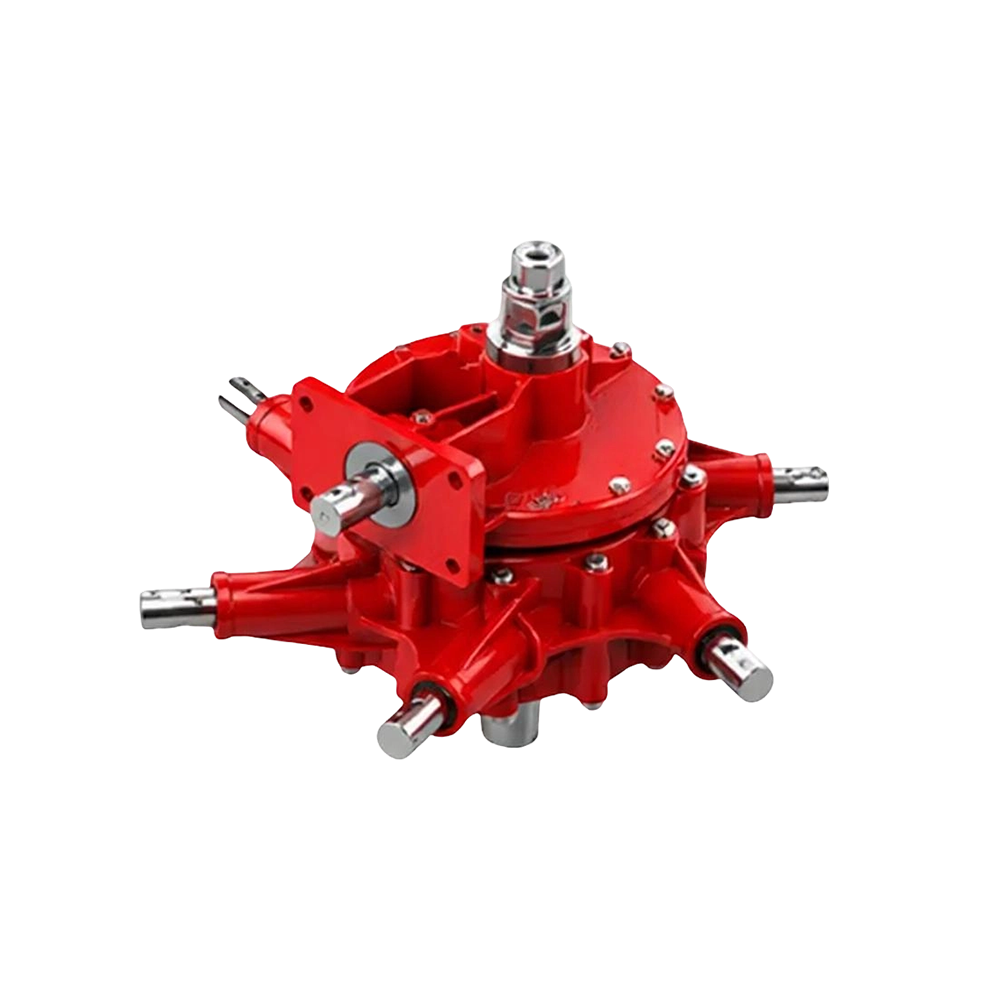
ND HR407 Rake Gearbox 1 Input Shaft 6 Output Shafts
Product OverviewThe ND HR407 multi-shaft rake gearbox is a dedicated transmissio... -
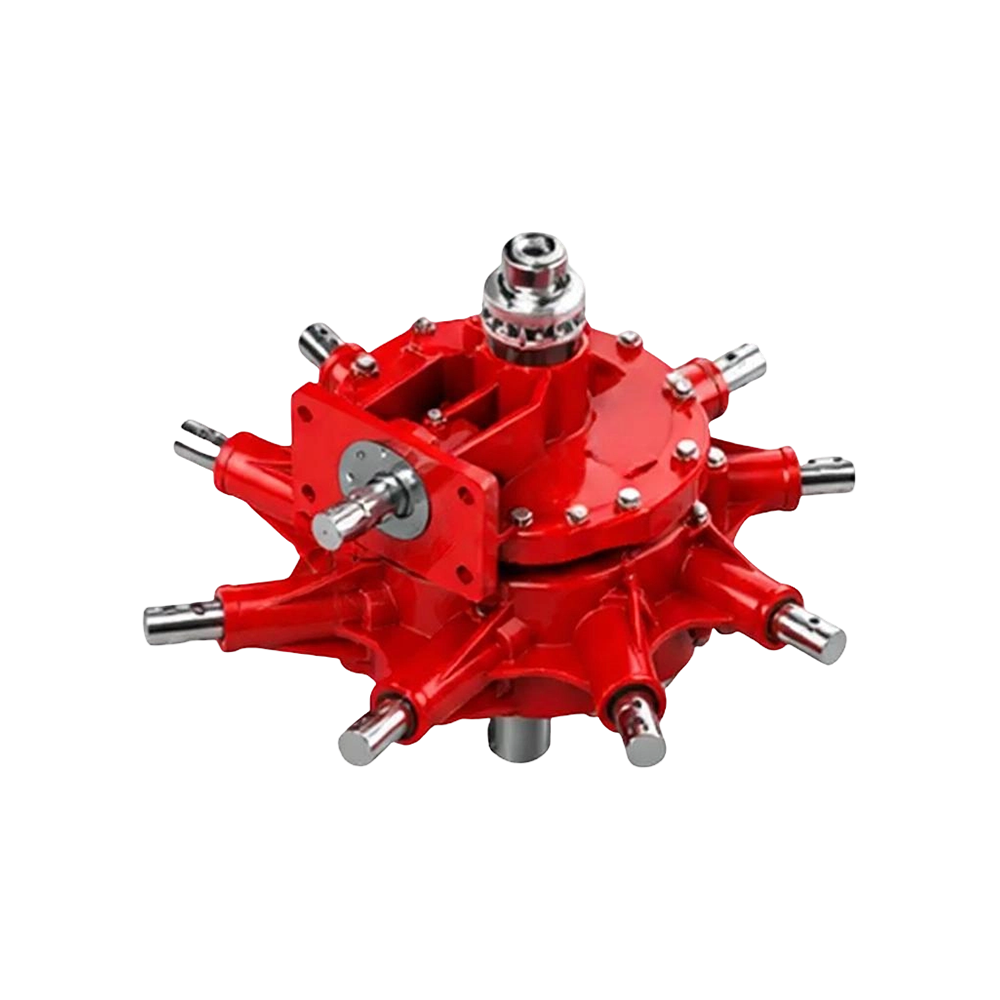
ND HR408 Hay Rake Gearbox with 1 Input & 8 Output Shafts
Product OverviewThe ND HR408 hay rake gearbox features a 1-input and 8-output sh... -
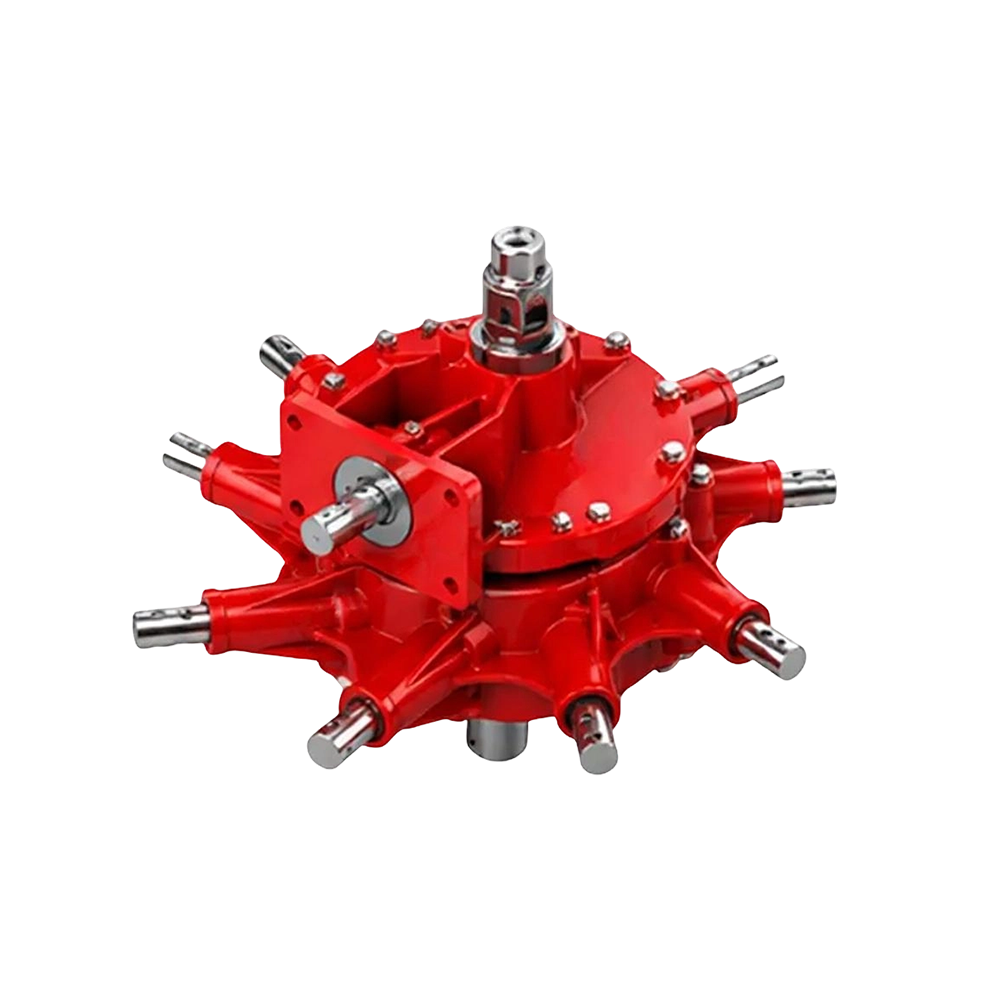
ND HR409 Agricultural Rake Gearbox 1 Input 9 Output Shafts
Product OverviewThe ND HR409 agricultural rake gearbox adopts a 1-in, 9-out mult... -
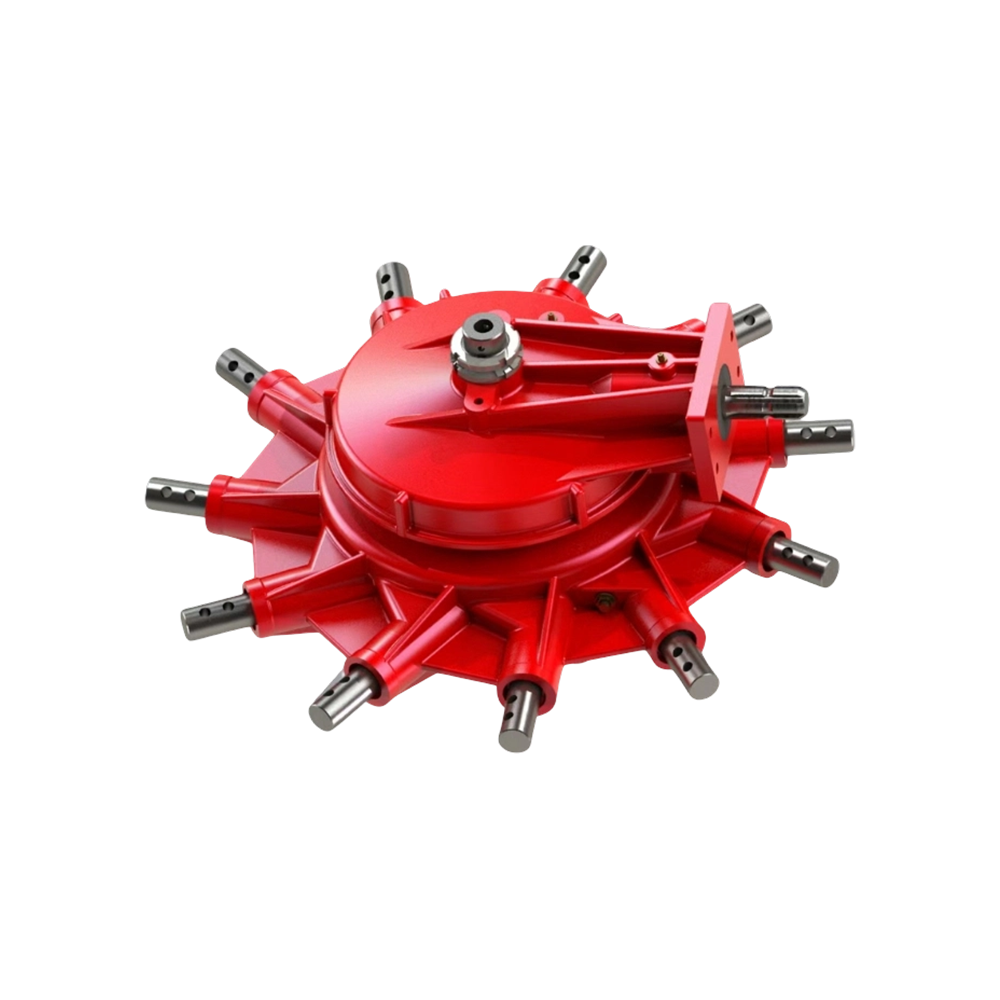
ND HR410 Farm Rake Transmission Unit 1 Input 11 Output Shafts
Product OverviewThe ND HR410 farm rake transmission unit with 1 input shaft and ... -
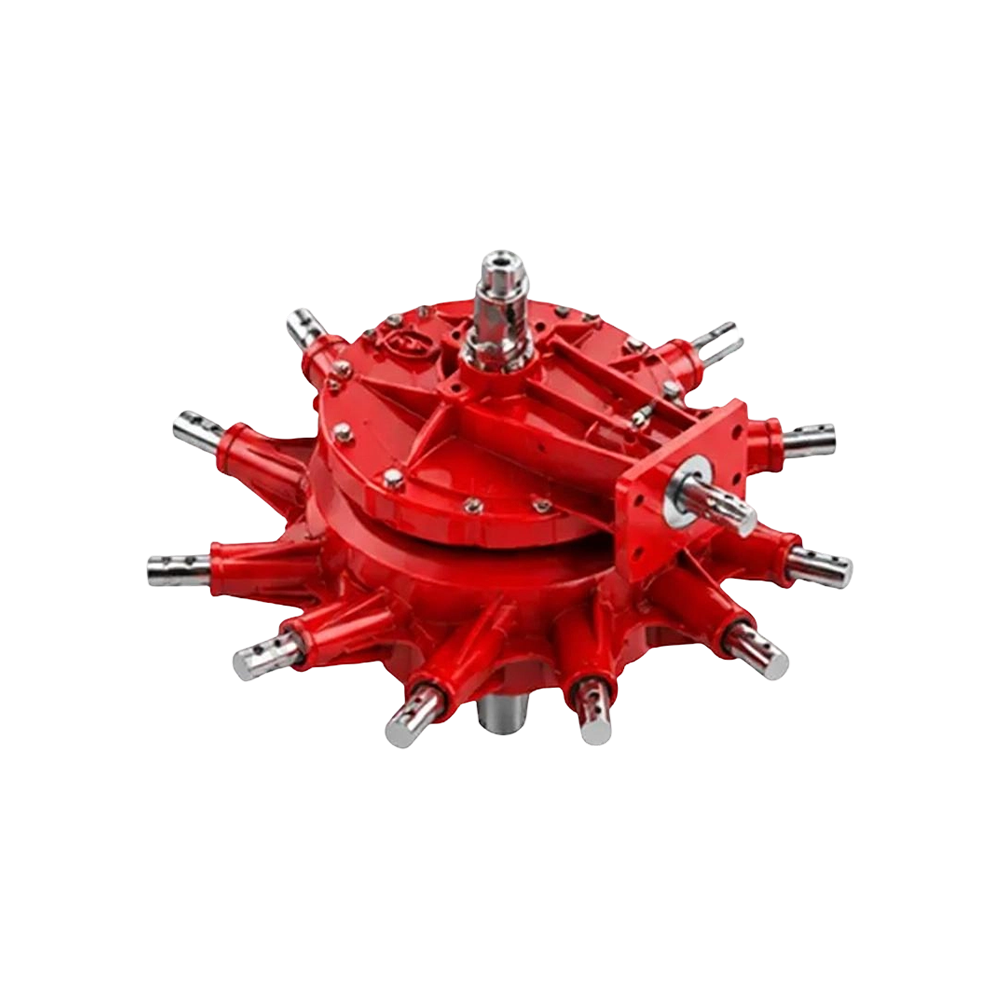
ND HR411 Hay Rake Gearbox Equipped with 1 Input and 12 Output Shafts
Product OverviewThe ND HR411 hay rake gearbox with 1 input and 12 output shafts ... -
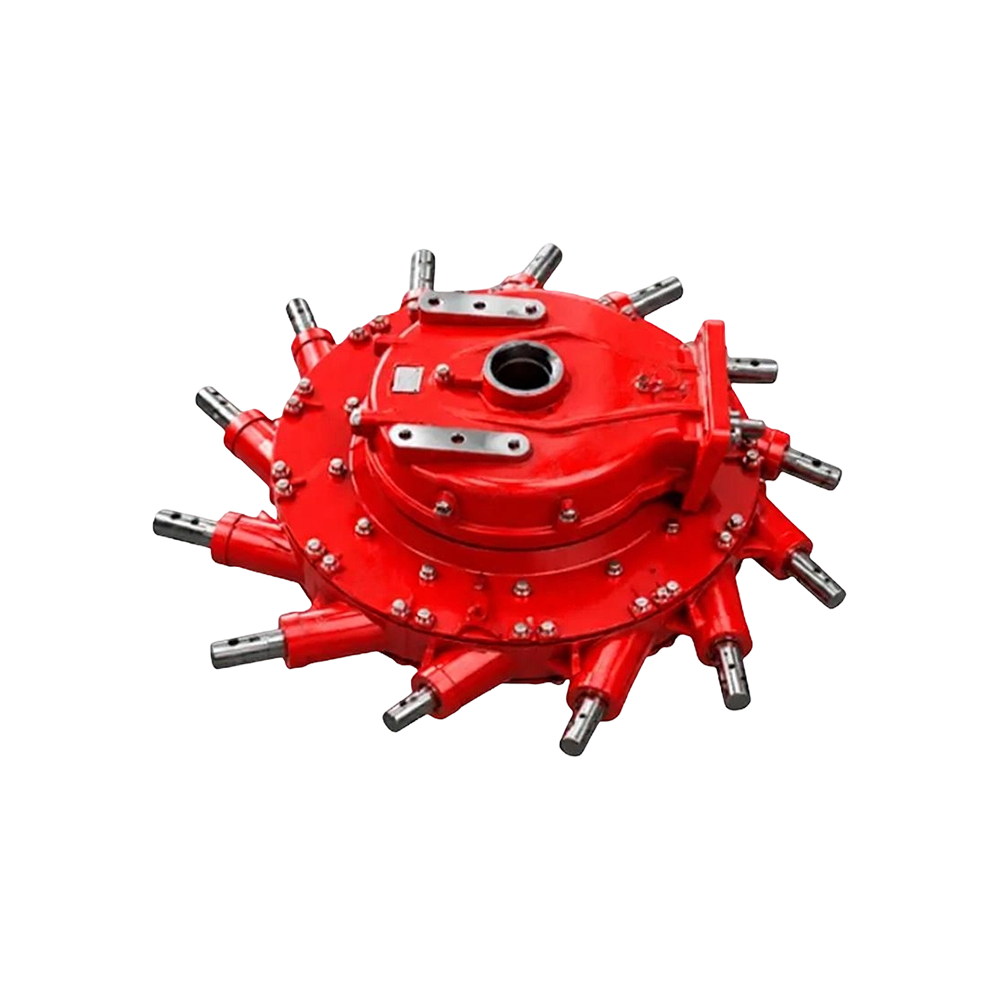
ND HR412 Rake Drive Gearbox 1 Input Shaft & 13 Output Shafts
Product OverviewThe ND HR412 rake drive gearbox with 1 input shaft and 13 output... -
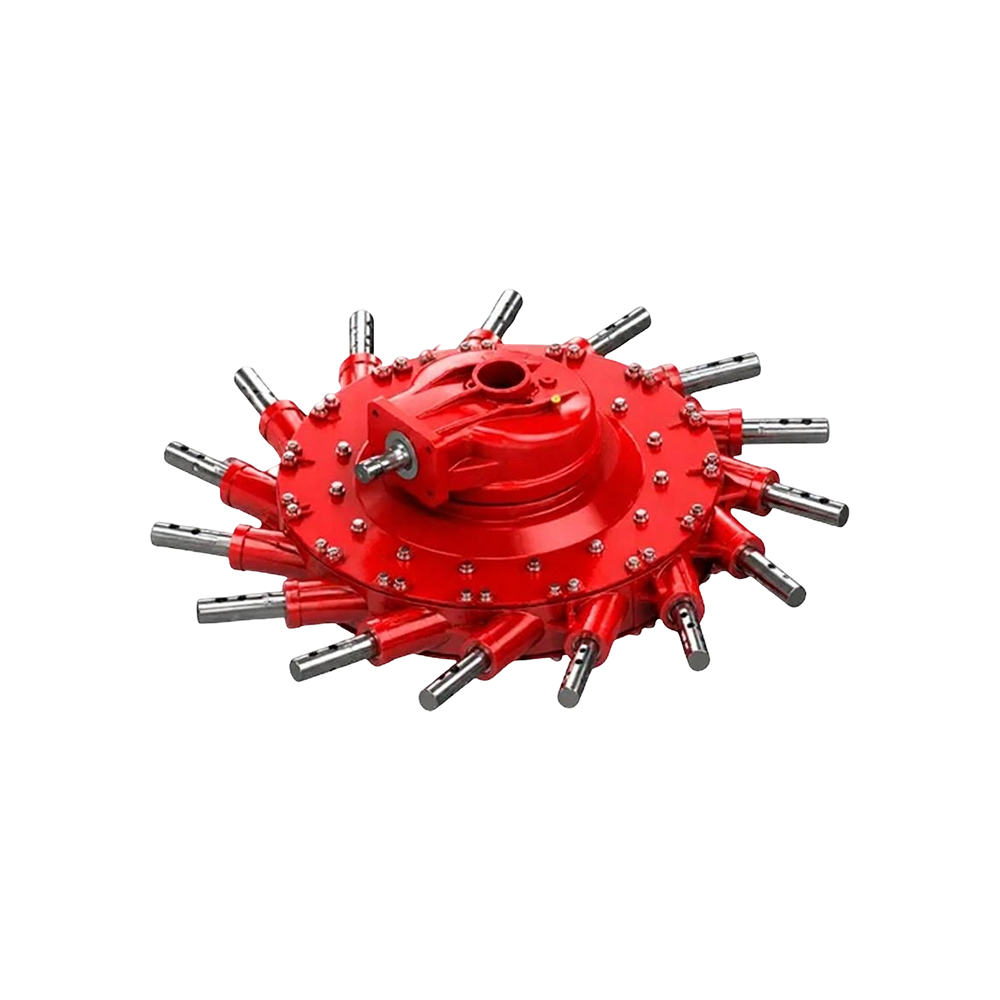
ND HR413 Agricultural Hay Rake Gearbox 1 Input 15 Output Shafts
Product OverviewThe ND HR413 agricultural hay rake gearbox with 1 input and 15 o...
ABOUT US
Your Trusted Partner in Agricultural
Transmission Solutions
Hangzhou Hengnie Machinery Co., Ltd.
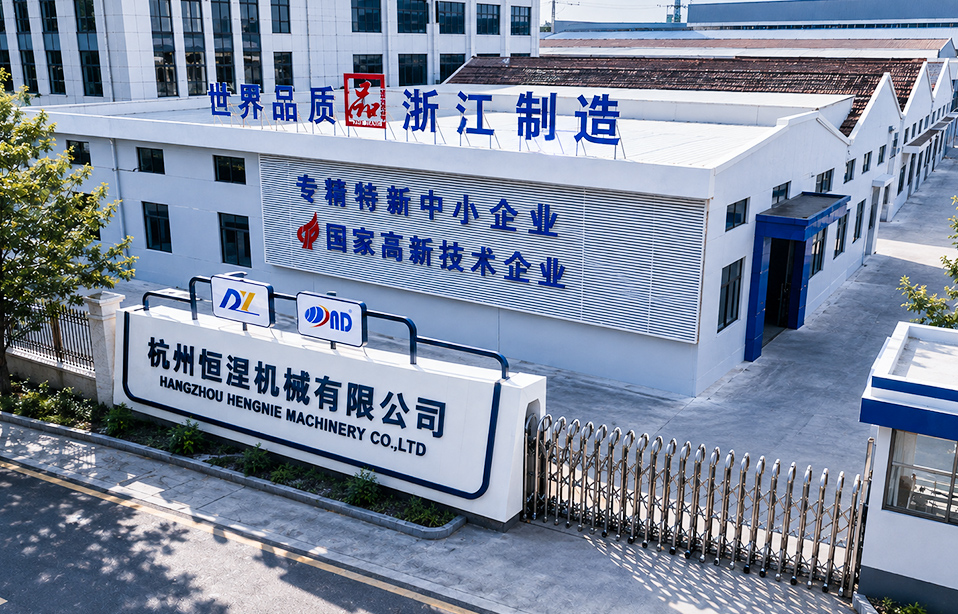
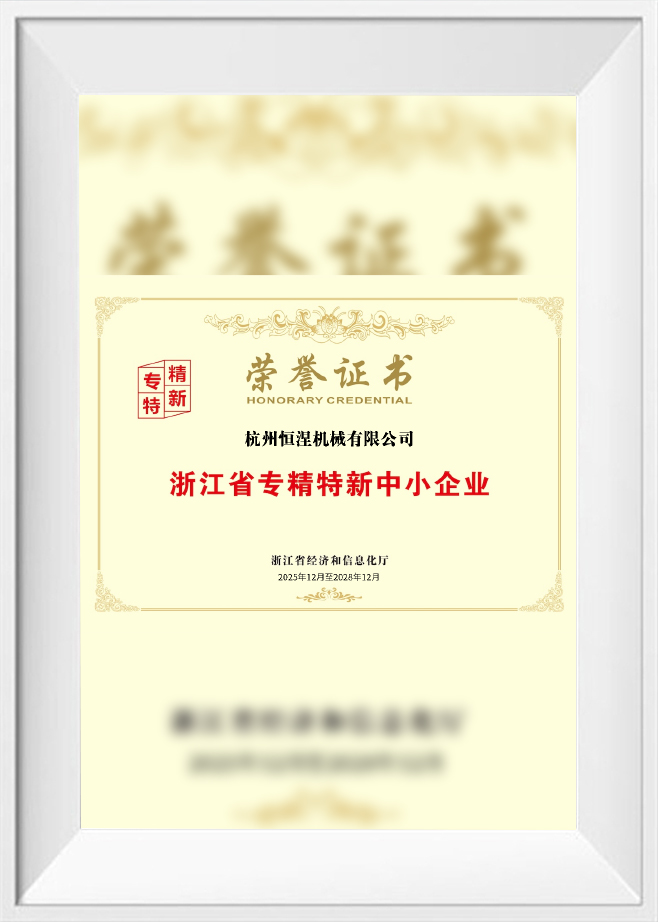
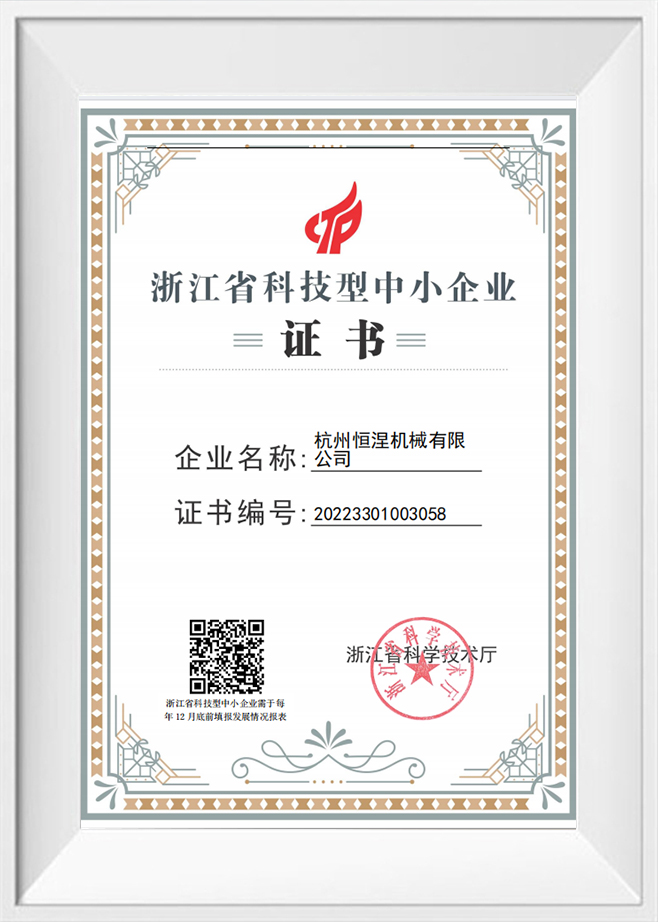
Founded in 2010, Hangzhou Hengnie Machinery Co., Ltd., located in Xiaoshan Industrial Park, Hangzhou, is a high-tech enterprise integrating R&D, production, sales, and technical services. It has been designated a National Specialized, Refined, and Innovative Enterprise. The company boasts a professional R&D team and numerous independent patents, focusing on the R&D and production of various agricultural machinery gearboxes and transmission components.
As a professional China HR Series Agricultural Rotary Rake Gearboxes Manufacturer and custom hay rake gearbox factory, Offering a complete range of products, it can customize to order and provides intelligent product customization services. The company owns the brands "ND," "AG," and "DY," and its products are compatible with various agricultural machinery and intelligent products. Over 85% of its products are exported to Europe, America, and Australia. With superior quality, technical strength, and excellent service, it has won global customer recognition. We sincerely welcome customers from all walks of life to cooperate for mutual benefit!
As a professional China HR Series Agricultural Rotary Rake Gearboxes Manufacturer and custom hay rake gearbox factory, Offering a complete range of products, it can customize to order and provides intelligent product customization services. The company owns the brands "ND," "AG," and "DY," and its products are compatible with various agricultural machinery and intelligent products. Over 85% of its products are exported to Europe, America, and Australia. With superior quality, technical strength, and excellent service, it has won global customer recognition. We sincerely welcome customers from all walks of life to cooperate for mutual benefit!
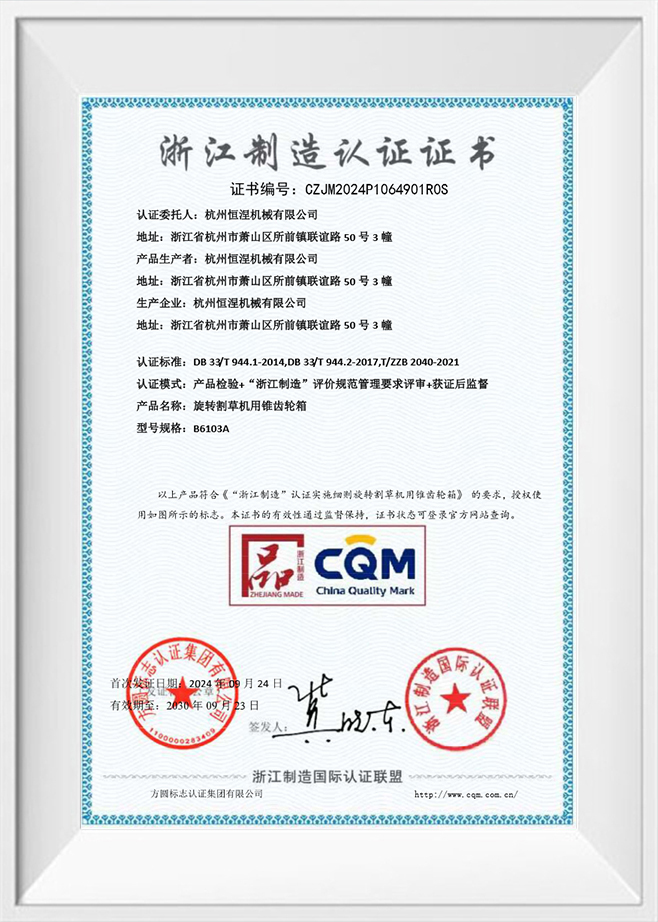
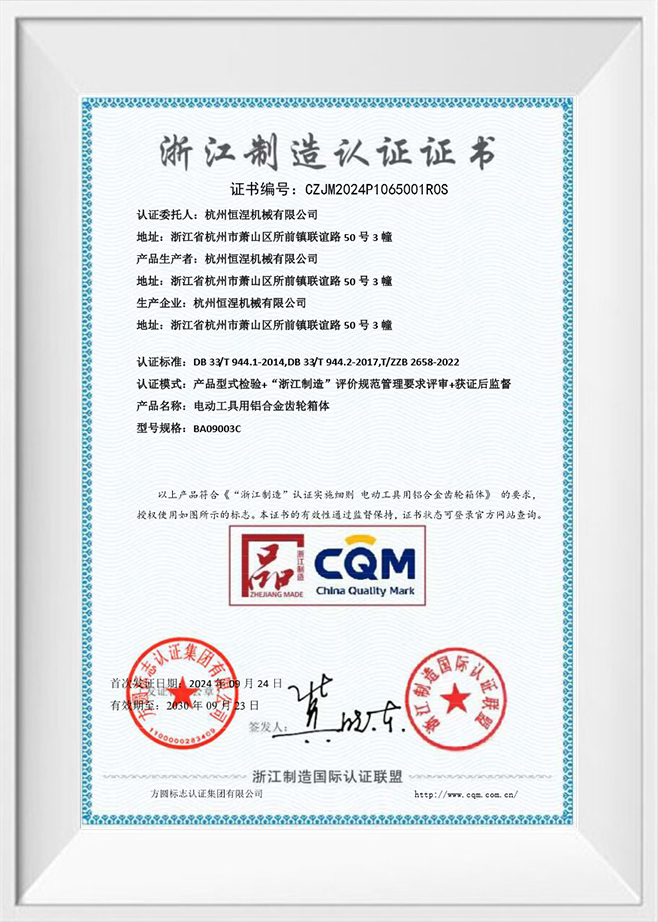
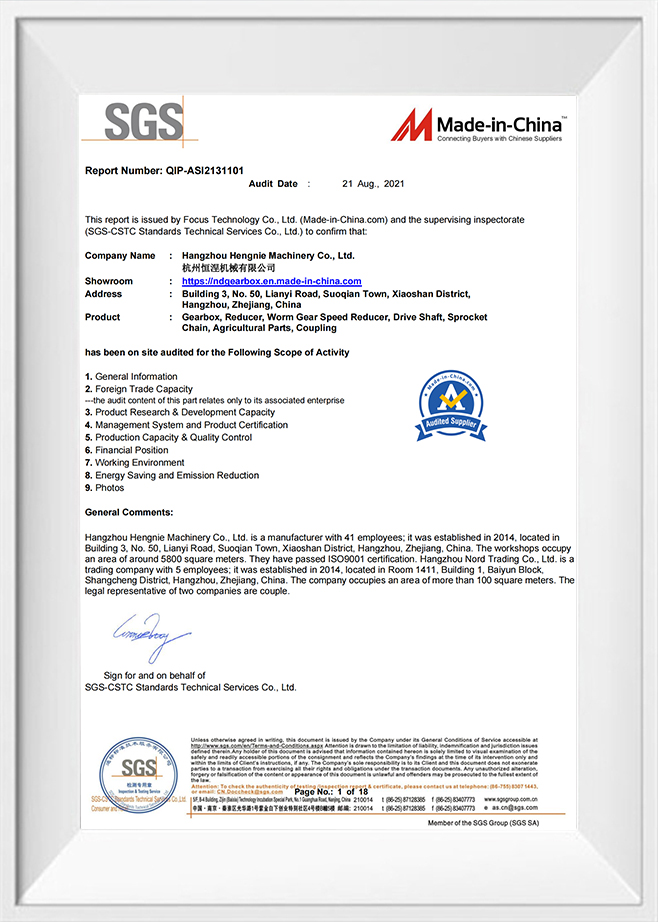
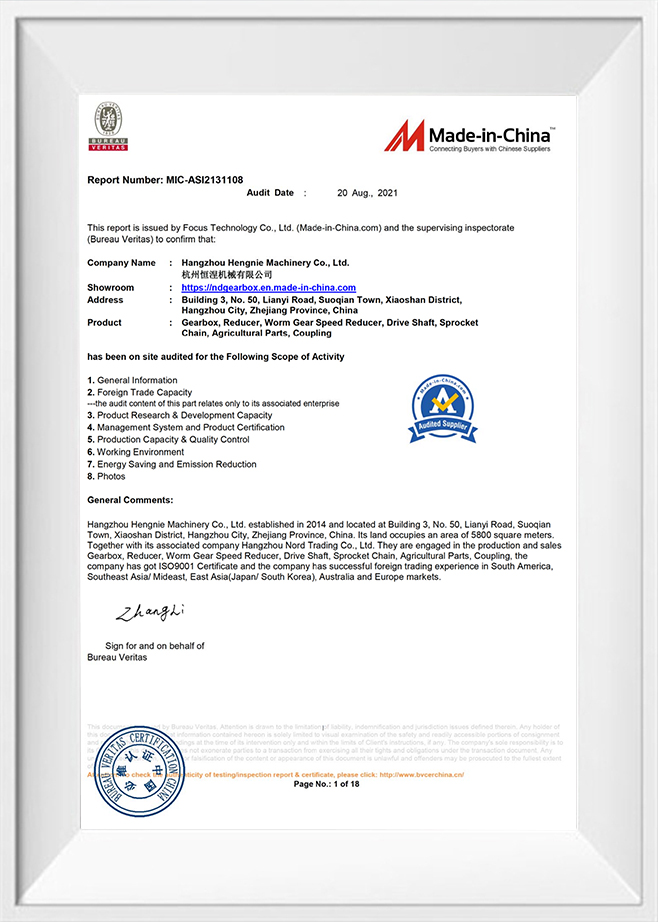
Honor
News
-
Industry News 2026-11-16
A rotary rake is built around one simple demand: a single tractor PTO shaft has to spin a whole row of tine rotors at matched speed and matched phase. The part that makes this possible is the rake gearbox, and in the HR series it is built as a one-input, mult...
View More -
Industry News 2026-11-09
A power harrow earns its reputation in the field, but the part that decides whether it survives a full season is usually hidden under a cover. The gearbox takes the PTO input from the tractor, redirects or steps it down, and delivers controlled torque to the ...
View More -
Industry News 2026-11-02
Corn headers are unforgiving drivetrains. Snapping rolls must turn slowly while carrying high torque, gathering chains must stay synchronized on both sides, the cross auger has to move a heavy mat of stalks, and any of these functions can seize within a secon...
View More
Contact us now
Industry Knowledge Expansion
Hangzhou Hengnie Machinery Co., Ltd. supplies the HR series as a dedicated transmission range for rotary rakes and hay rakes, not as a modified industrial gearbox. Based in Xiaoshan Industrial Park, Hangzhou, China, we design and manufacture the gearbox in-house under the ND brand and export the majority of our production to Europe, Australia, and North America. Our HR Series Agricultural Rotary Rake Gearboxes manufacturer range covers single-input, multi-output drives from the ND HR407 to the ND HR413.
All Agricultural Rotary Rake Gearboxes in the HR series share the same working principle: one input shaft accepts tractor PTO power, and the multi-shaft housing distributes that torque to the rake's rotor drive points. This multi-shaft architecture is standardized instead of being built from several bolt-on gearboxes, which improves synchronous operation and simplifies machine assembly.
Product range and positioning
The current HR series catalog is organized around a single transmission family with a growing number of output shafts. That structure lets an OEM select the gearbox according to how many rake rotors the frame carries and how wide the working pass must be.
| Model | Configuration | Position in the range |
|---|---|---|
| ND HR407 | 1 input / 6 output shafts | Compact rake transmissions with fewer rotor heads |
| ND HR408 | 1 input / 8 output shafts | Mid-size rotary rakes and hay rakes |
| ND HR409 | 1 input / 9 output shafts | Standard configurations for multi-rotor rakes |
| ND HR410 | 1 input / 11 output shafts | Wider rake frames requiring additional drive points |
| ND HR411 | 1 input / 12 output shafts | High-rotor-count rake systems |
| ND HR412 | 1 input / 13 output shafts | Wide heavy-duty rake systems |
| ND HR413 | 1 input / 15 output shafts | Maximum output count in the current catalog |
The model number does not by itself define working width. A rake with wide rotor spacing may need fewer output shafts than a rake with more, tightly spaced rotors. We therefore treat the output shaft count as the starting point for a machine-specific configuration, not as the final answer.
Application fit for rotary raking and forage gathering
The HR series was developed around the duty cycle of grass and hay harvesting equipment. Rotary rakes must handle continuous cyclic torque from tines lifting and gathering forage, and the gearbox can see that load for hours across uneven ground, dry grass, and dusty field conditions.
- The gearbox functions as the center transmission carrier for a rotary rake, with output shafts aligned to the rotor drive positions.
- A six-output model suits a compact rake layout, while eleven-, twelve-, thirteen-, and fifteen-output models extend the same architecture to larger rake frames.
- Working width, rotor count, and rotor spacing are the primary selection variables; crop type and windrow width are secondary but still affect gearbox duty.
- We confirm input rotation direction during configuration so the rake rotor arms can be phased correctly on the machine.
Our engineers select the shaft configuration from the customer's machine layout, not only from the working width. That distinction matters because rotor shafts on a rotary rake are often spaced to match tine overlap and windrow formation, and the gearbox must line up with those fixed positions.
Engineering value: heat treatment, sealing, and bearing protection
Durability in a rake gearbox comes from the gear metallurgy and the housing seal, not just from housing thickness. The HR series gear bodies undergo quenching and tempering wear-resistant treatment, allowing them to absorb the cyclic torque of forage pickup and gathering without fatigue loss.
The overall sealed, dustproof structure prevents dry grass debris and field dust from invading the bearing cavity. That is a key requirement for grassland work, where chopped crop material and dust are continuously thrown around the gearbox during raking.
In practice, these two factors determine service life more than peak torque. A rake gearbox that remains clean internally and maintains stable tooth contact will run for a full season with low operational vibration and uniform transmission. For continuous daily use, we match the seal specification, breather arrangement, and oil level recommendation to the customer's expected operating hours and field conditions.
Quality control and acceptance testing
Hengnie operates an ISO-based quality management system with three control layers: incoming material inspection, in-process monitoring, and final product inspection. Checks cover dimensional accuracy, gear performance, sealing, assembly condition, surface finish, and export packaging.
For the HR series, dimensional control is particularly important because a multi-output gearbox must align every output shaft with the corresponding rotor bearing on the machine. We use professional testing equipment to verify gear meshing, seal integrity, and assembly status before release.
For customized units, we can organize performance tests and a factory acceptance test before shipment. Test records, inspection reports, drawings, and full export shipping documents are reviewed and signed off so the delivered unit matches the approved sample.
Configuration options, OEM/ODM, and integration support
The HR series is part of our Application-specific Gearbox program. Alongside other dedicated agricultural transmissions, it is designed around the workload, installation space, and vibration conditions of the complete machine rather than adapted from a general-purpose gearbox.
Configuration work can include output shaft count and spacing, mounting flange geometry, input connection, output shaft length, seal specification, and paint or surface protection. We also confirm oil capacity, breather position, and fastening details according to the machine frame.
For machines outside the current catalog, we develop new models using drawings, samples, or working-condition data. If the project needs a different shaft count, a modified housing, or a complete non-standard drive unit, our Custom Gearboxes route covers design, prototyping, testing, and serial production.
Safety, installation, and machine-level responsibility
Operator safety on a rotary rake is managed at the implement level. Driveline guards, rotor shields, and PTO guards are part of the machine builder's scope, while we confirm the gearbox input rotation, oil fill, and mounting orientation so those guards can be designed correctly.
The gearbox itself is a mechanical unit and needs no external oil pump or cooling circuit. Installation is straightforward: fix the gearbox to the rake frame, connect the PTO driveline, align the output shafts to the rotor bearings, and verify rotation direction before the rotor arms are fitted.
We supply installation drawings and commissioning instructions with each order. For overseas projects, remote consultation helps the assembly team avoid common issues such as incorrect oil level, reversed rotation, or misaligned output shafts.
Information We Use to Configure Your Solution
To issue a precise configuration and quotation, we need the following project data:
- Machine type, working width, and number of rake rotors or rotor arms.
- Input type: tractor PTO speed and spline size, hydraulic motor, or other drive source.
- Required output shaft positions, center distances, and rotation direction.
- Rated tractor power, motor power, and expected peak torque.
- Target rotor speed or drum speed at the standard PTO rpm.
- Mounting envelope, orientation, and rake frame connection details.
- Operating environment: crop type, moisture, dust level, and daily operating hours.
- Drawing, sample, or reference machine if the shaft layout is non-standard.
- Destination port and packaging requirements.
With this information we recommend a model, prepare a machine-specific drawing, and define the performance data before mass production. Front-loaded technical review reduces the risk of repeated design changes at a later stage and keeps sampling aligned with the order.
Maintenance, spare parts, documentation, and delivery
HR series gearboxes are designed for field service with standard workshop tools. We provide drawings, specification manuals, and installation guides, and our engineers can support the customer by remote Q&A, fault analysis, and working-condition consultation after delivery.
Long-term maintenance is supported through our Gearbox Spare Parts & Components range, which covers replacement gears, shafts, and related transmission parts. This allows maintenance teams to restore a rake gearbox quickly during the season instead of replacing the complete unit.
Every export order is packed for long-distance sea freight. Packaging, packing lists, and product nameplate information are checked before shipment, and the delivery scope is confirmed with the customer so that the receiving team knows exactly what arrives at the destination port.
Customer FAQs
What is the difference between the ND HR407 and ND HR413?
The ND HR407 has one input shaft and six output shafts; the ND HR413 has one input shaft and fifteen output shafts. In general, a rake with more rotor heads uses a higher output count, but the final selection should also consider working width, rotor spacing, and expected torque.
Can you manufacture a custom hay rake gearbox?
Yes. We are a hay rake gearbox factory and also operate as an OEM/ODM supplier. We develop custom gearboxes from drawings, samples, or working-condition data, and we can modify shaft count, output spacing, mounting interface, input/output direction, and surface protection.
What output shaft arrangements are available on Rotary Rake Gearboxes?
Our standard Rotary Rake Gearboxes cover 6, 8, 9, 11, 12, 13, and 15 output shafts with one input shaft. The exact output spacing and rotation directions are confirmed against the rake frame drawing before production.
What quality and testing do you perform before shipping?
We operate an ISO-based quality management system with incoming material control, in-process monitoring, and final product inspection. HR series checks cover dimensional accuracy, gear performance, sealing, assembly status, surface finish, and export packaging. Customized units can also be covered by a factory acceptance test.
What information do you need for a quotation?
Send the machine type, working width, rotor count, PTO speed, drive arrangement, mounting space, and target output speed. For a custom model, include a drawing or sample, and if available the tractor power and peak load profile. We respond with a model recommendation and configuration.

-
 +86 18058161630
-
 +86 571 81607235
-
 sales@ag-mech.cominfo@ag-mech.comiris@ag-mech.com
-
 No.21 Feixiang Rd, Suoqian Town,Xiaoshan Dist. Hangzhou, Zhejiang Province, China

Products

Contact Us
Copyright ©
Hangzhou Hengnie Machinery Co., Ltd.
All Rights Reserved. OEM/ODM Agricultural Rotary Rake Gearboxes Manufacturer

