


 English
 русский
 Español
 Português
 italiano

Home / News / Industry News / Helical Gearbox for Agricultural Machinery: How It Works, Types and Selection


Industry News
Oct 23,2026
Helical Gearbox for Agricultural Machinery: How It Works, Types and Selection
Agricultural drive guide
A helical gearbox for agricultural machinery uses gears whose teeth are cut at an angle, so each tooth enters the mesh gradually instead of all at once. That gives a smoother, quieter drive that carries higher loads than a straight-cut gear of the same size, which is why helical gears sit inside many PTO reducers, rotary tiller drives, wood chipper gearboxes and grain auger units. Selection comes down to the ratio, the direction change, the housing and the load your machine puts on it.
What Makes a Gear Helical
In a spur gear the teeth run straight across the gear, parallel to the shaft. In a helical gear the teeth are cut along a spiral, at an angle called the helix angle. When two helical gears mesh, contact starts at one end of a tooth and spreads across its face as the gear turns. At any moment several teeth share the load, so torque passes from gear to gear without the sudden knock of a spur mesh.
The angled tooth has one trade-off. It pushes sideways along the shaft as it turns, called axial thrust, so a helical gearbox needs bearings that can carry that thrust. A good housing and bearing layout handles it without trouble, and it is one reason heavy cast iron cases are common in helical gearboxes for farm equipment.
How a Helical Gearbox Works on a Farm Machine
Power usually comes from the tractor PTO. It enters the gearbox on the input shaft, passes through one or more helical gear stages, and leaves on the output shaft at a new speed, torque and sometimes a new direction. The same gear train can work in three ways:
Reduce
Slows the output and raises torque. Used where the implement needs force more than speed, such as wood chippers and tillers.
Increase
Speeds the output up. Used where a driven part must spin faster than the PTO, such as some generators and rotor drives.
Redirect
Turns the power path, commonly by 90 degrees, so a forward-pointing PTO can drive a shaft that runs across the machine.
The housing does more than hold the gears. It keeps oil in, keeps dust and water out, and takes the impact that comes back through the implement when it hits stones, roots or dense material.
Why Agricultural Machines Use Helical Gears
01
Smooth power in rough work
Gradual tooth contact reduces vibration and noise, which eases wear on the shafts, bearings and the machine frame.
02
Higher load capacity
Several teeth carry the load at once, so a helical set can handle more torque than a straight-cut set of similar size.
03
Long working hours
Steady meshing suits machines that run for hours at a time, such as PTO generators and grain augers.
04
Compact power transfer
High capacity in a modest case helps where space around the PTO or implement frame is tight.
Helical Gears Compared with Other Gear Types
Helical gears are not the only option. This table shows where they fit against the other gear types used in farm gearboxes.
| Gear Type | Shaft Layout | Smoothness | Typical Farm Use |
| Helical | Parallel, or crossed at an angle | High | PTO reducers, tillers, chippers, generators, augers |
| Spur | Parallel | Moderate, noisier at speed | Simple, lower-speed drives |
| Spiral bevel | Intersecting, often 90 degrees | High | Right angle drives, balers, grass cutters |
| Planetary | Coaxial | High | High-torque drives such as feed mixers |
In practice these combine. A 90 degree farm gearbox can use a helical stage together with a bevel stage, so product names often mention both. For a wider look at how gearbox series differ, see the B series cast iron gearboxes and the parallel shaft gearboxes.
Main Types of Helical Gearboxes for Farm Equipment
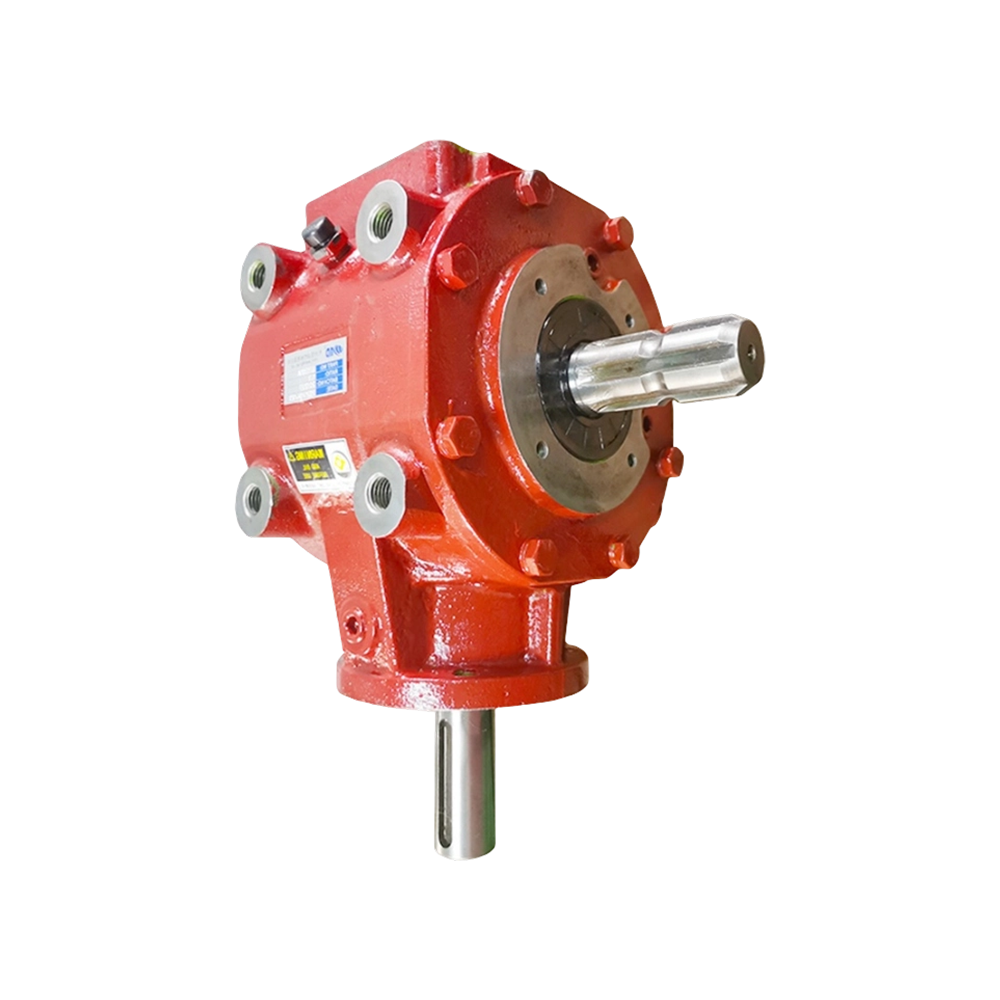
90 degree cast iron helical gearbox
Turns PTO power through a right angle in a rugged cast iron case. The ND B313 is built for freewheel rotary tillers and cultivators, with an impact-resistant housing, a helical gear set for tillage torque and dustproof, leakproof sealing for open fields.
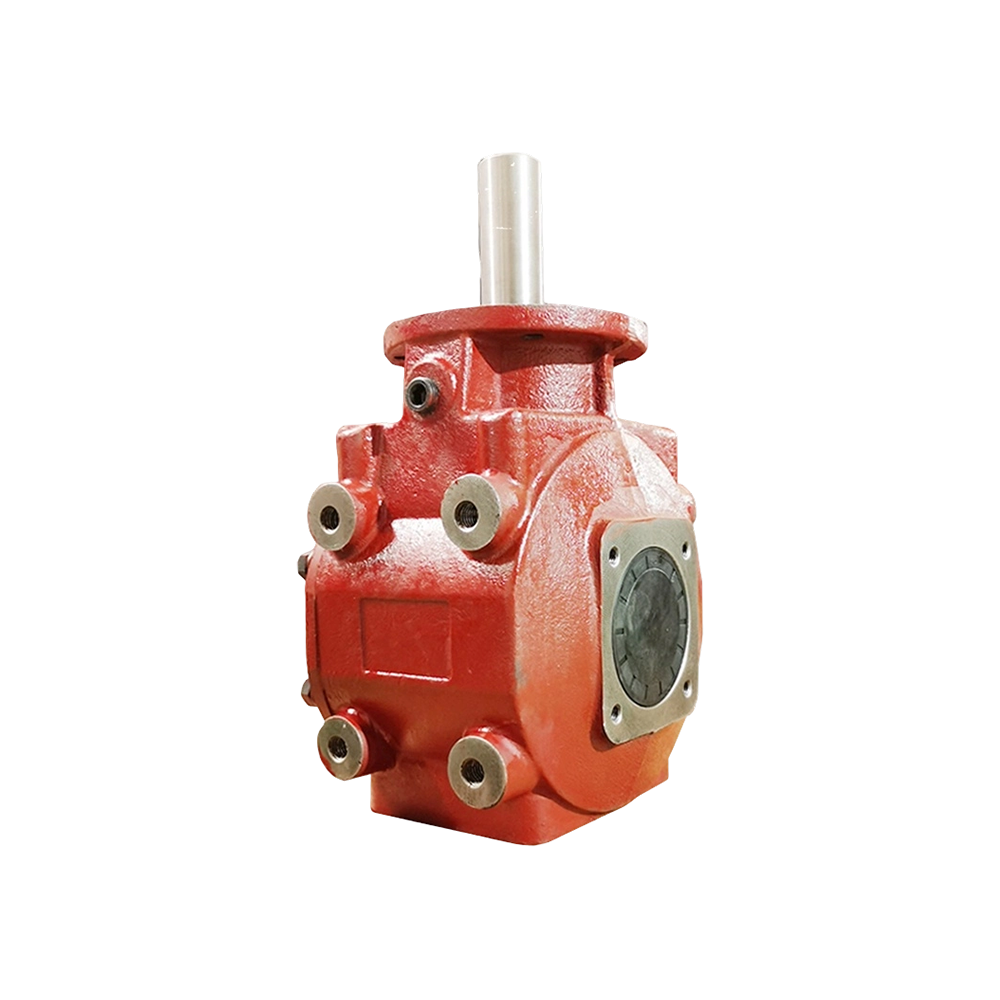
Vertical PTO gear reducer
Converts tractor power into low-speed, high-torque output for crushing. The ND B198 is made for wood chippers and shredders, with a vertical cast iron structure that bears heavy crushing loads and irregular impact.
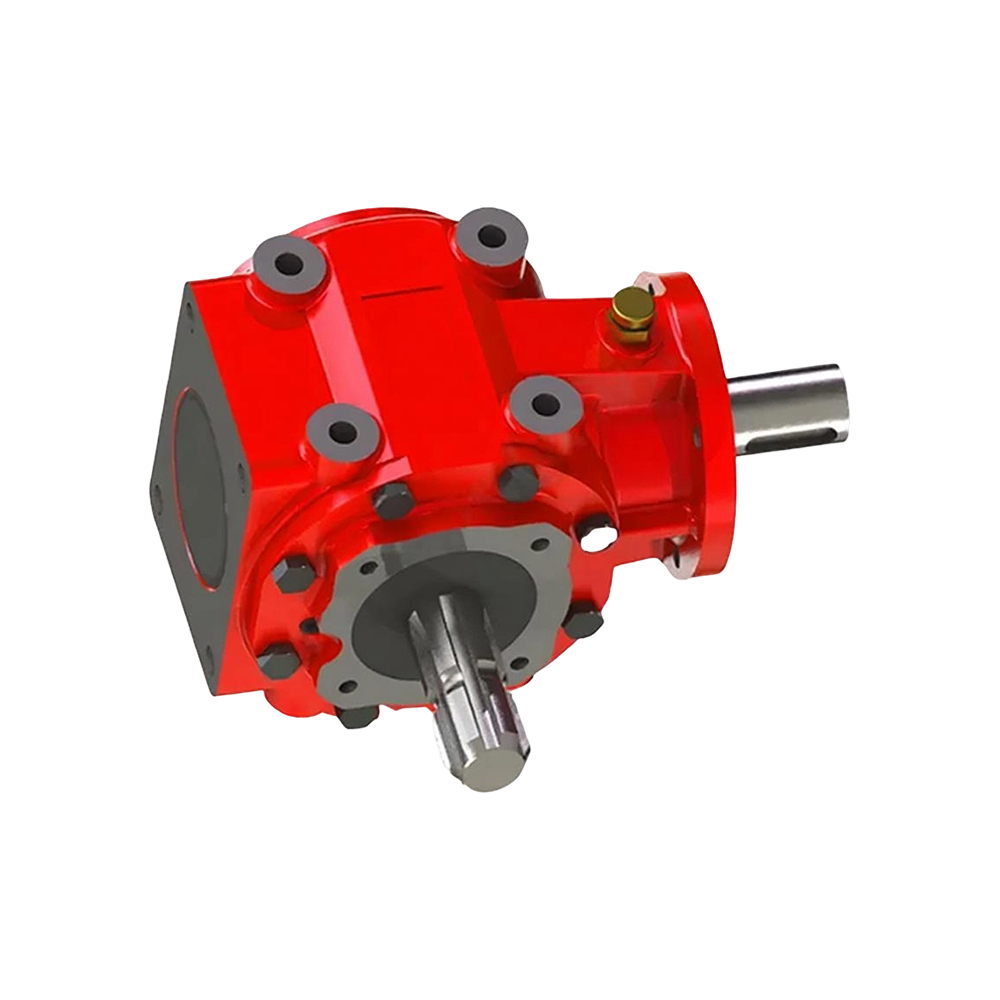
Helical speed increaser
Raises output speed instead of cutting it. The ND B330 is a 1:3 fixed ratio 90 degree unit with finely machined helical gears for smooth, low-wear high-speed rotation.
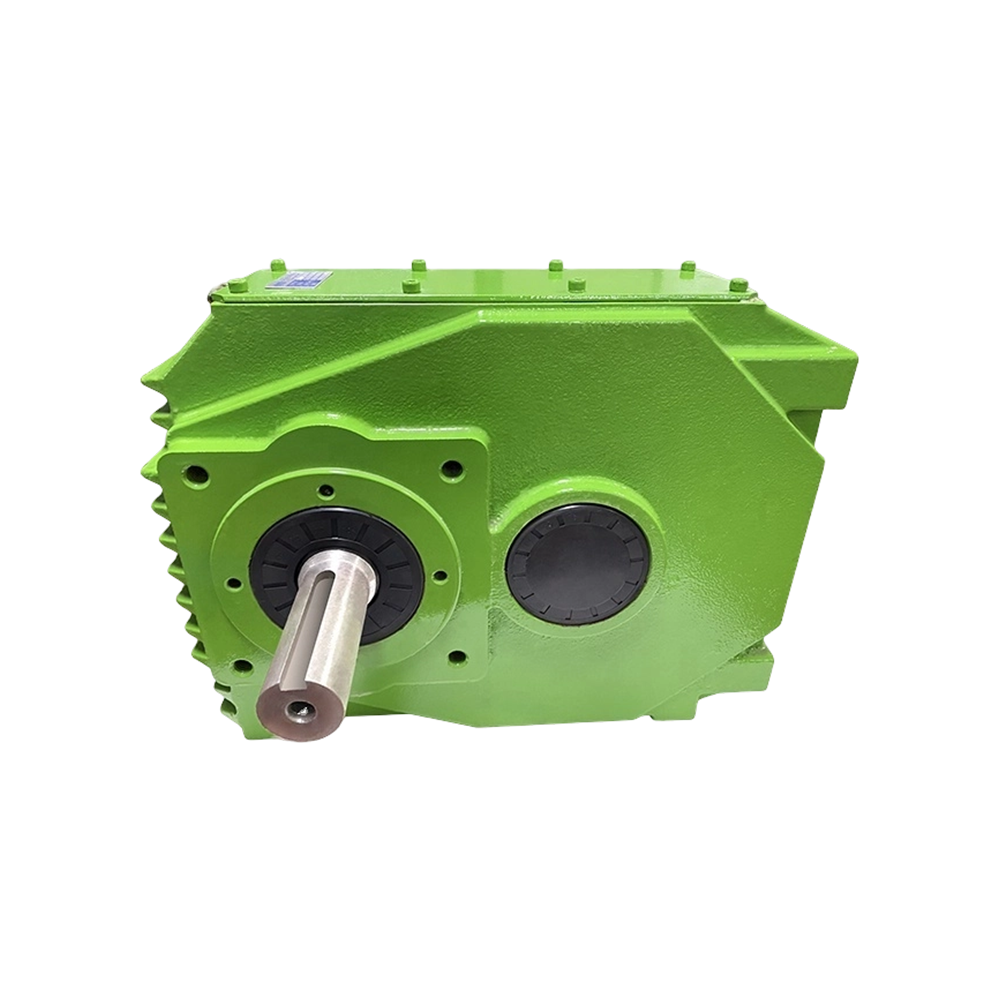
Parallel shaft helical gearbox
Keeps input and output on parallel axes for a straight power path. The ND P130 uses precision helical gears in a one-piece thickened cast iron housing to turn tractor PTO power into stable output for PTO generator systems running for long hours.
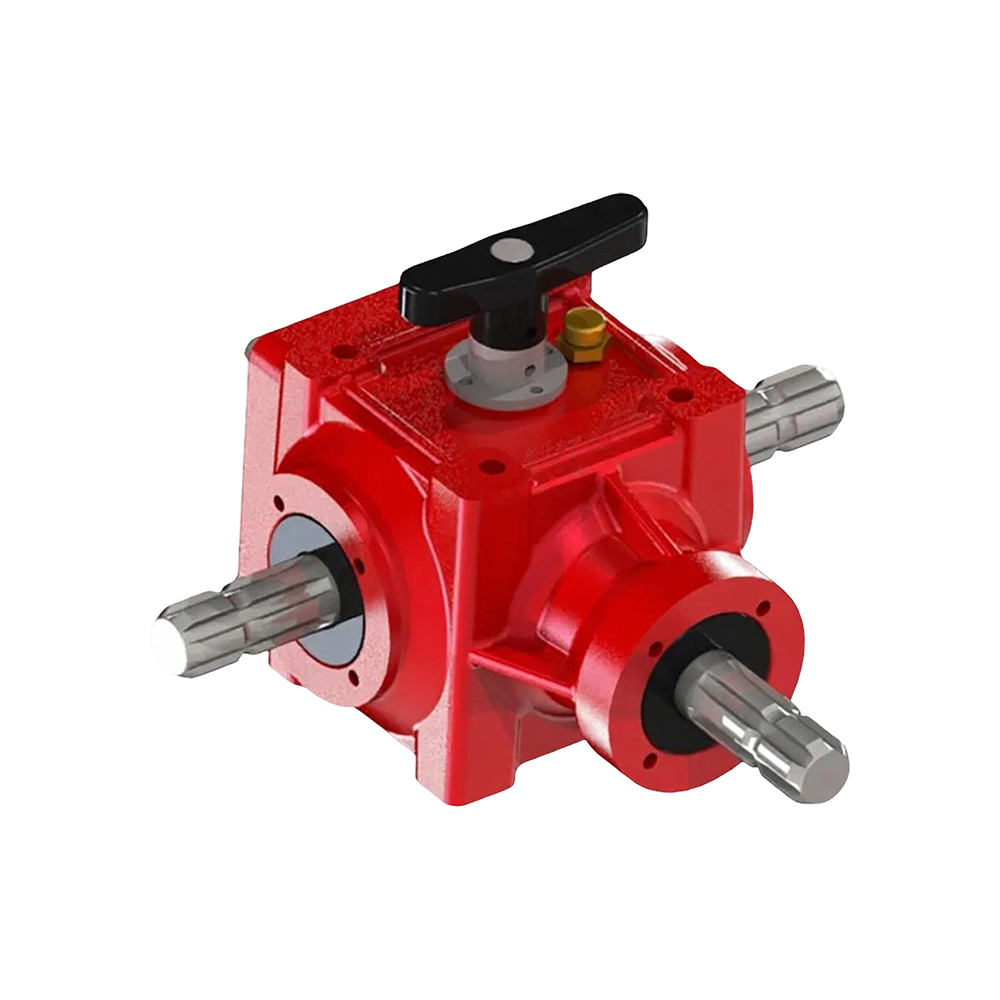
Clutch helical gearbox
Adds a clutch so power can be connected or cut without stopping the main machine. The ND B1102E suits grain auger conveyors that feed in bursts, with reinforced internals for frequent start-stop loads and sealing against grain dust.
Matching a Helical Gearbox to the Machine
| Machine | What the Drive Needs | Gearbox Type |
| Rotary tiller, cultivator | Steady torque, impact resistance, freewheel action | 90 degree cast iron helical |
| Wood chipper, shredder | Low speed, high torque, shock loads | Vertical PTO reducer |
| PTO generator | Smooth, continuous output for long hours | Parallel shaft helical |
| Grain auger conveyor | Start-stop feeding, dust protection | Clutch helical |
| High-speed rotor or pump drive | Output faster than the PTO | Helical speed increaser |
How to Select the Right Helical Gearbox
1
Speed change
Decide whether the machine needs a reducer, a 1:1 transfer or a speed increaser, and what output speed the implement runs at.
2
Direction
Check whether the output must turn 90 degrees from the PTO or stay on a parallel axis.
3
Load and shock
Soil, wood and stone create impact. Heavy shock calls for a cast iron case and a bearing arrangement that takes axial thrust.
4
Shafts and mounting
Match the input to the PTO, the output to the implement, and the mounting style to the frame. Confirm these on the model page or with the supplier.
5
Duty and environment
Long continuous hours, dust, mud and water splash all push the choice towards a thicker housing and better sealing.
6
Extra functions
Ask whether a clutch or freewheel is needed, since both change the gearbox design.
Product pages often leave out numbers such as ratio, shaft size and weight. Send your machine type, PTO speed and a drawing to the supplier to confirm them before ordering. If no standard model fits, a custom gearbox can be developed around your machine.
Maintenance and Warning Signs
Routine care
- Fill with the oil grade and quantity the maker specifies
- Check oil level and look for seal leaks during the season
- Keep breathers and the case surface clear of mud and residue
- Change oil at the end of the season, or sooner after wet or dusty work
Warning signs
- A rising whine or grinding that was not there before
- A case that runs much hotter than usual
- Oil weeping at the seals or the joint faces
- Play in the shaft, or metal particles in the oil
When a gear or shaft wears out, the part can be replaced without the whole unit. Cylindrical gears, bevel gears and power transmission shafts are listed under gearbox spare parts and components.
Frequently Asked Questions
What is a helical gearbox in agricultural machinery
It is a gearbox that uses angled-tooth gears to move power from a PTO or engine to an implement, changing speed, torque or direction on the way. The angled teeth mesh gradually, so the drive runs smoothly under heavy farm loads.
What is the difference between helical and spur gears
Spur gear teeth run straight across the gear and mesh all at once. Helical gear teeth are cut at an angle and mesh gradually, which makes them smoother and quieter and lets them carry more load, at the cost of some axial thrust.
Why do helical gearboxes need strong bearings
Angled teeth push sideways along the shaft as they turn. Bearings must carry that axial thrust, which is why heavy-duty helical gearboxes use rigid cast iron housings and carefully arranged bearings.
Can a helical gearbox be used as a speed increaser
Yes. The same gear train that reduces speed can be arranged to raise it. The ND B330, for example, is a 1:3 helical speed increaser for agricultural machinery that needs the output to run faster than the input.
How do I choose a helical gearbox for a rotary tiller or wood chipper
Start with the machine type, PTO speed, whether the output must turn 90 degrees, and how much shock the machine sees. Tillers and chippers face impact from soil and wood, so a cast iron housing with strong sealing is the safe starting point. Confirm ratio and shafts with the supplier before ordering.
Related Products

-
 +86 18058161630
-
 +86 571 81607235
-
 sales@ag-mech.cominfo@ag-mech.comiris@ag-mech.com
-
 No.21 Feixiang Rd, Suoqian Town,Xiaoshan Dist. Hangzhou, Zhejiang Province, China

Products

Contact Us
Copyright ©
Hangzhou Hengnie Machinery Co., Ltd.
All Rights Reserved. Wholesale Agriculture Speed Reducers Supplier Custom Agricultural Gearboxes Manufacturer

